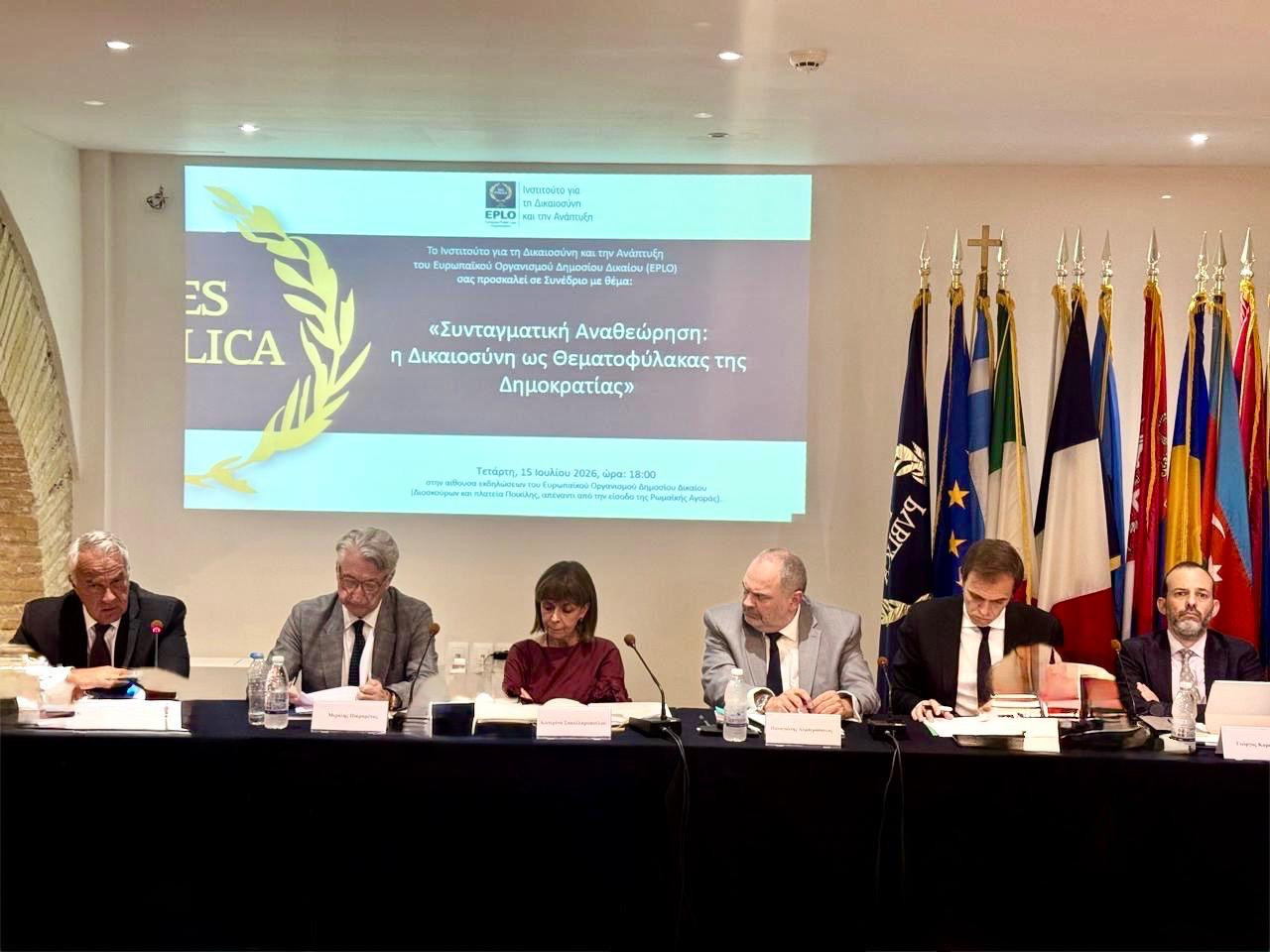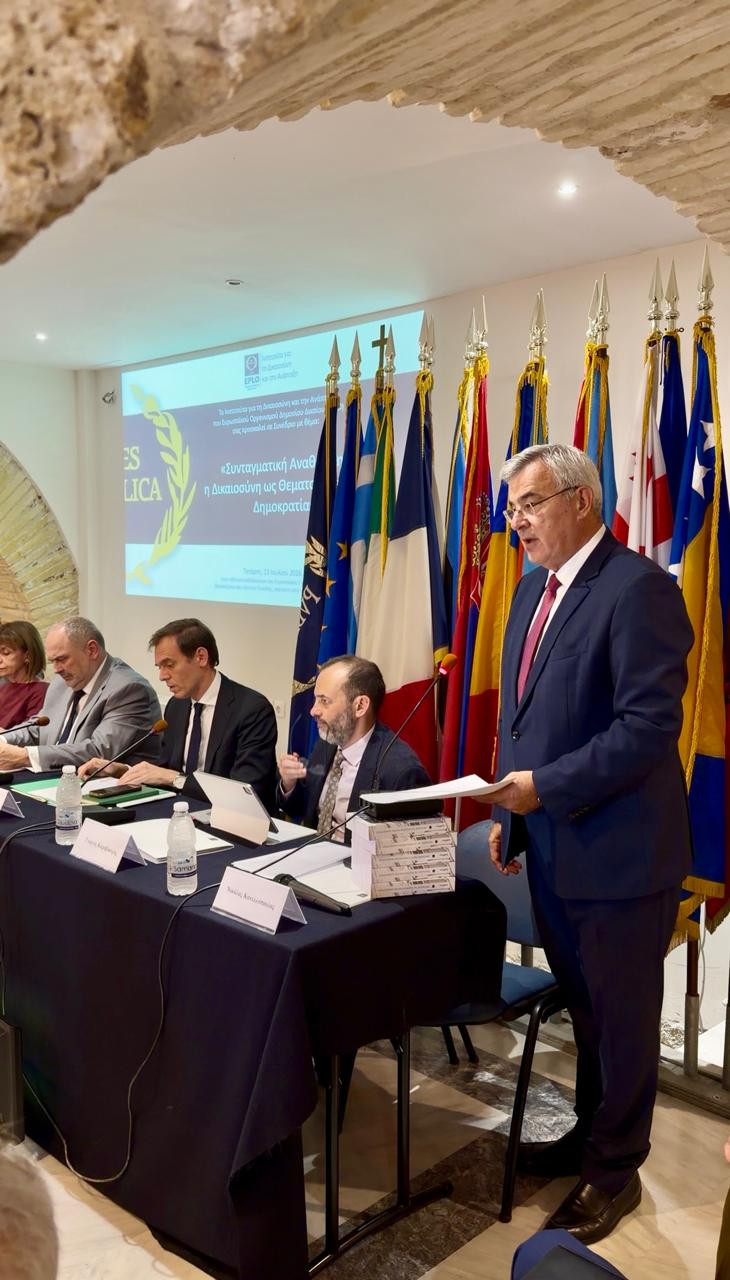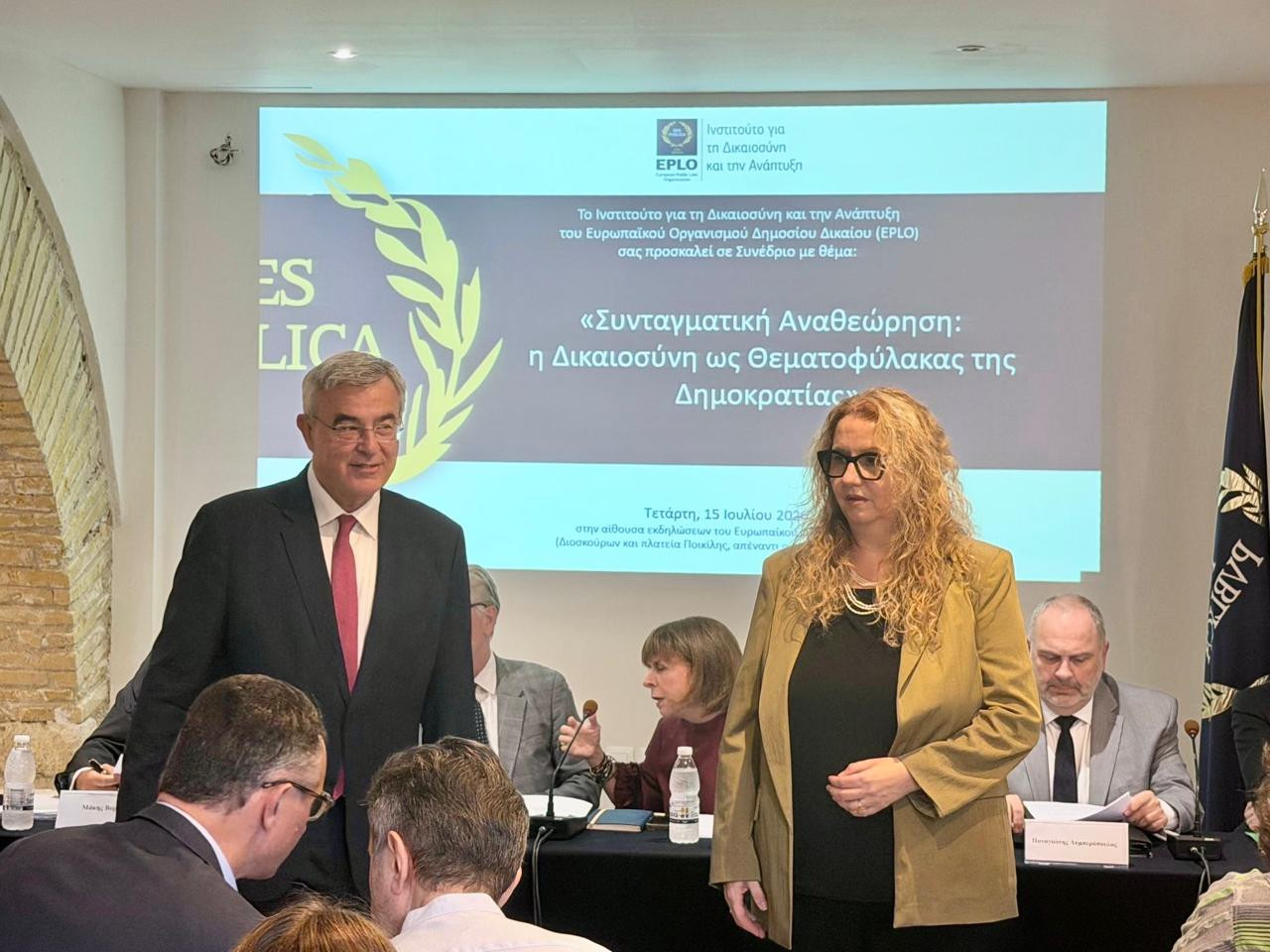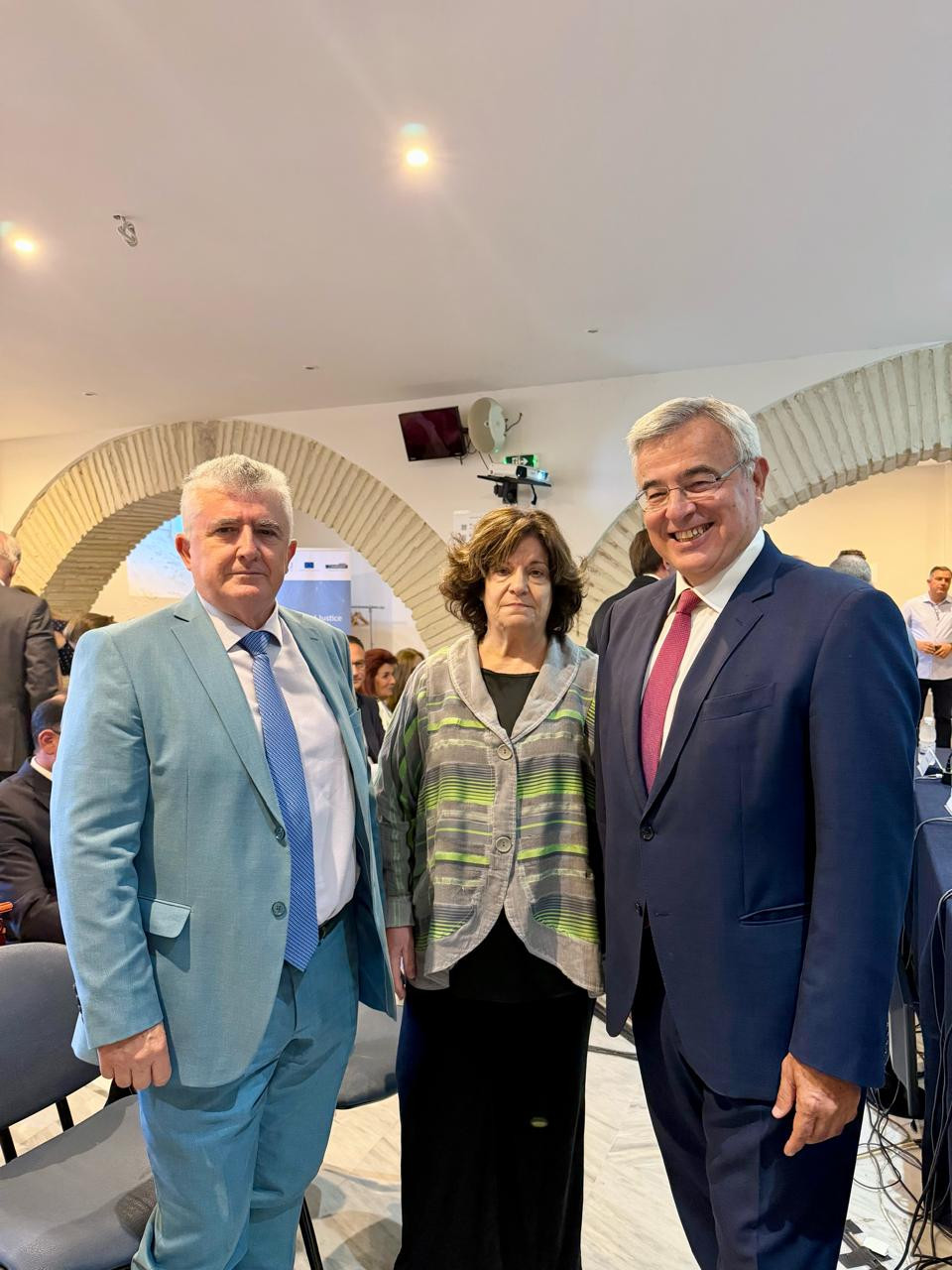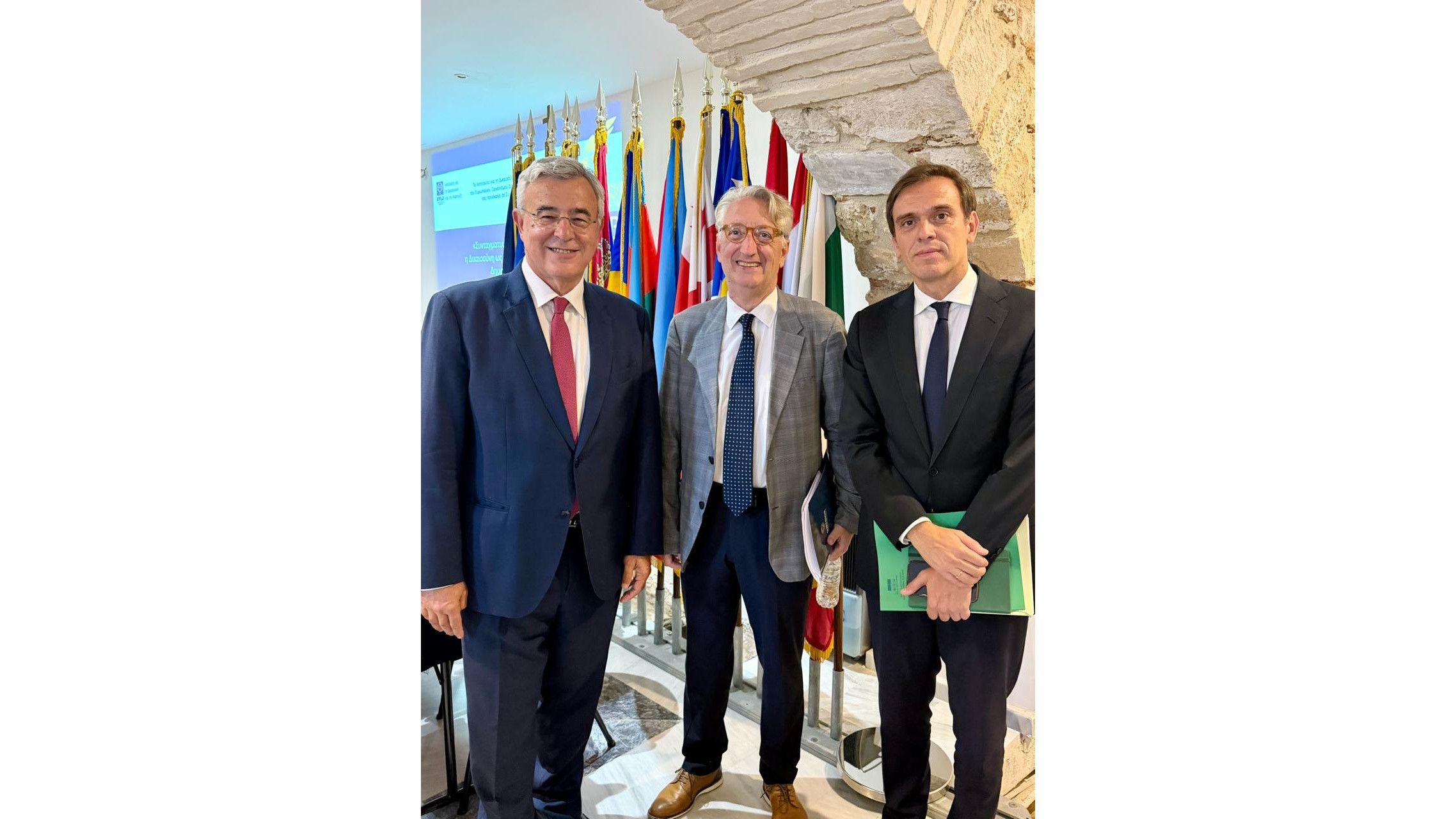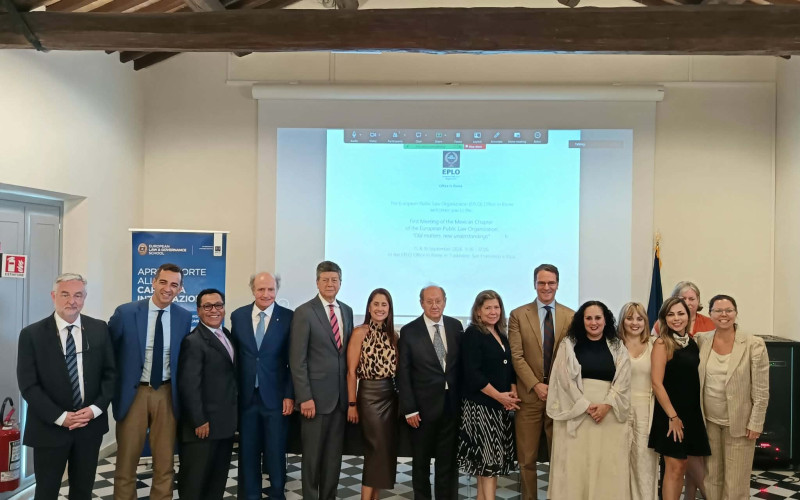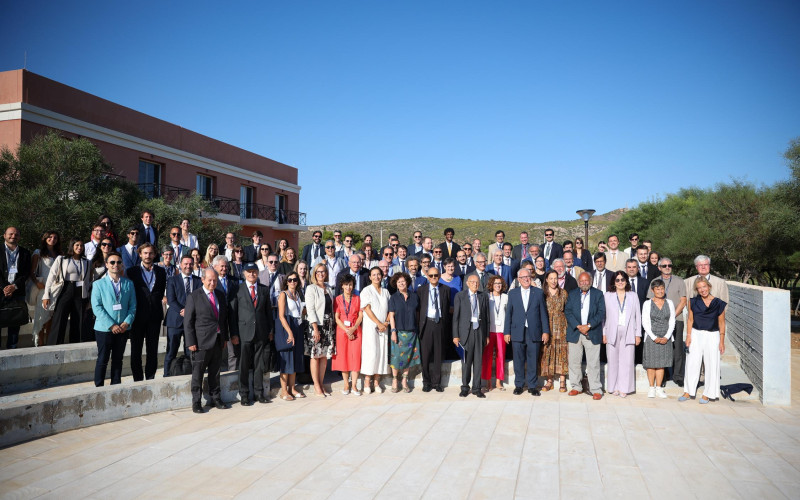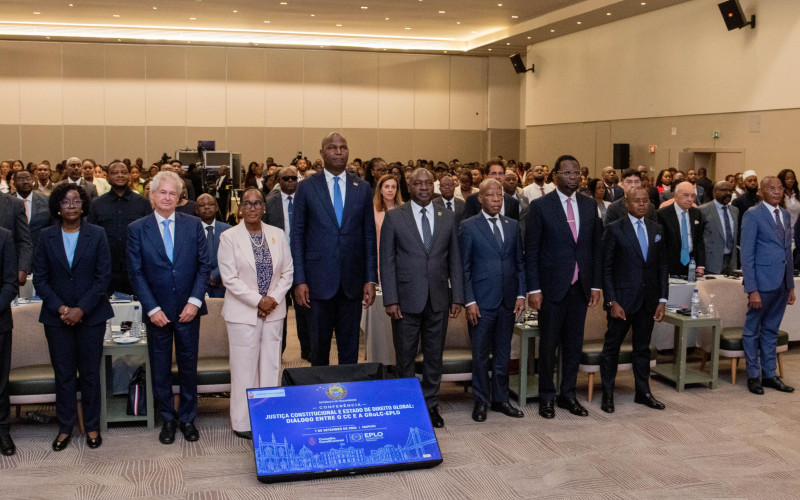

The conference entitled "Constitutional Revision: Justice as the Guardian of Democracy", organized by the Institute for Justice and Growth of the European Public Law Organization (EPLO), was held with exceptional success and remarkably high-level participation on Wednesday, 15 July 2026, at the premises of the European Public Law Organization (EPLO) in Plaka, Athens.
The occasion for the conference was the critical juncture at which the Parliamentary Committee on Constitutional Revision is in full progress of its deliberations, having received a multitude of proposals from both the governing majority and the other political parties, as well as from the supreme courts and the judicial associations of the country.
The ambition of the conference was to open a substantive, civilised and scientifically rigorous dialogue among individuals who know and serve Justice — and who understand that institutions are not reformed through rhetoric but through rigorous, systematic and responsible work.
The composition of the panel constituted in itself a powerful message in this direction. The discussion was moderated by the former President of the Hellenic Republic and former President of the Council of State, Ms Katerina Sakellaropoulou — the most fitting person to open and lead this dialogue, as a jurist who served the highest institutions of the country with integrity and distinction.
The panel of speakers comprised the President of the Council of State, Mr Michalis Pikramenos, the President of the Supreme Civil and Criminal Court (Areios Pagos), Mr Panagiotis Lymperopoulos, the Member of Parliament of New Democracy and Chair of the Committee on Constitutional Revision, Mr Makis Voridis, the Member of Parliament and Parliamentary Representative of PASOK-KINAL, Mr Dimitris Mantzos and the Associate Professor of Constitutional Law at the Faculty of Law of the Aristotle University of Thessaloniki, Mr Giorgos Karavokyris.
This is a rare composition bridging the judiciary, the legislature and the academic community — demonstrating that when Justice and the State engage in dialogue with mutual respect and without ulterior motives, they can produce results of real value.
Opening remarks were delivered by Mr Nikolas Kanellopoulos, Attorney-at-Law, President of the Institute for Justice and Growth (EPLO), who welcomed the distinguished speakers and audience also on behalf of the Director of the Organization, Professor Mr Flogaitis, who was unable to attend as he was in Vienna participating in the proceedings of the summer session of the United Nations International Civil Service Commission, of which he is an elected member.
The discussion developed primarily around three central thematic axes highlighting the most critical aspects of the current revision process:
1. The selection of the leadership of the Judiciary (Article 90 par. 5)
The need to reform the system for selecting the leadership of the Supreme Courts was highlighted, with the aim of ensuring the balanced participation of all three branches of government — judicial, legislative and executive — within a framework of meritocracy, transparency and democratic legitimacy. Nearly all institutional bodies — the Council of State, the Court of Audit, the Union of Prosecutors and the Union of Judges and Prosecutors — have submitted relevant proposals.
2. The criminal liability of ministers (Article 86)
The imperative need for a radical revision of the current system was emphasised, with the decoupling of criminal proceedings from political interventions.
3. Artificial Intelligence in the Constitution (Article 5A)
The historic opportunity for Greece to become one of the first countries to constitutionally enshrine human-centred artificial intelligence was highlighted.
Beyond the three central axes, the discussion also addressed a multitude of other critical issues: the retirement age of the judiciary (Article 88 par. 5), judicial incompatibilities (Article 89), digital trials and the constitutional entrenchment of electronic procedures (Article 99 par. 3 and 5), as well as the preventive review of constitutionality.
The common denominator of all presentations was the position that constitutional revision is not a technical matter but an act of self-awareness of a democracy — the moment when a society asks itself whether its fundamental law corresponds to the times, whether it adequately protects the citizen and whether it safeguards its institutions.
In particular, the following were noted:
• The rare institutional convergence: the very bodies of the Judiciary are calling for change, submitting well-documented proposals.
• The need for the revision process to transcend the expediencies of the moment and look to the long-term duration of institutions.
• The importance of dialogue between the Judiciary, the State and the academic community as a prerequisite for substantive reforms.
• The obligation of all to deliver to the citizen a Constitution better than the one they inherited.
The event brought together supreme court judges, academics, distinguished jurists, senior public administration officials and young scholars, contributing to a multifaceted and high-level dialogue on the future of the Constitution and Justice in our country.
The Conference was honored by the presence of, among others:
• Mr Evangelos Bakelas, Prosecutor of the Supreme Civil and Criminal Court (Areios Pagos)
• Ms Ioanna Klapa-Christodoulea, former President of the Supreme Civil and Criminal Court (Areios Pagos)
• Ms Aikaterini Chondrorizou, Vice-President of the Supreme Civil and Criminal Court (Areios Pagos)
• Mr Christos Ntouchanis, Vice-President of the Council of State
• Ms Margarita Gortzolidou, Vice-President of the Council of State
• Ms Emmanouela Panopoulou, Vice-President of the Legal Council of the State
• Ms Angeliki Papapanagiotou-Leza, former Commissioner of the State before the Regular Administrative Courts
• Ms Theodora Vitouladiti, Deputy Commissioner of the State before the Regular Administrative Courts
• Ms Evangelia Karamba, Deputy Commissioner of the State before the Regular Administrative Courts
• Mr Konstantinos Menoudakos, former President of the Hellenic Data Protection Authority, President of OPEMED
• Mr Kyriakos Oikonomou, former Justice of the Supreme Civil and Criminal Court (Areios Pagos), President of OMED
• Mr Philoktimon Arnaoutoglou, former Vice-President of the Council of State
• Mr Dimitrios Foukas, Judge of the Court of Appeal, Member of the Board of the Union of Judges and Prosecutors
• Mr Ioannis Selimis, Executive Secretary of the Region of Attica
• Ms Zefi Nikolaou, President of the Association of Regulatory Compliance Professionals of Greece (SEKASE/ASCO Greece)
The Institute for Justice and Growth of EPLO remains committed to fostering an evidence-based, open and inclusive dialogue on democratic governance in Greece and Europe.