4th "Quo Vadis AI?" Conference · 4 June 2026 · Athens
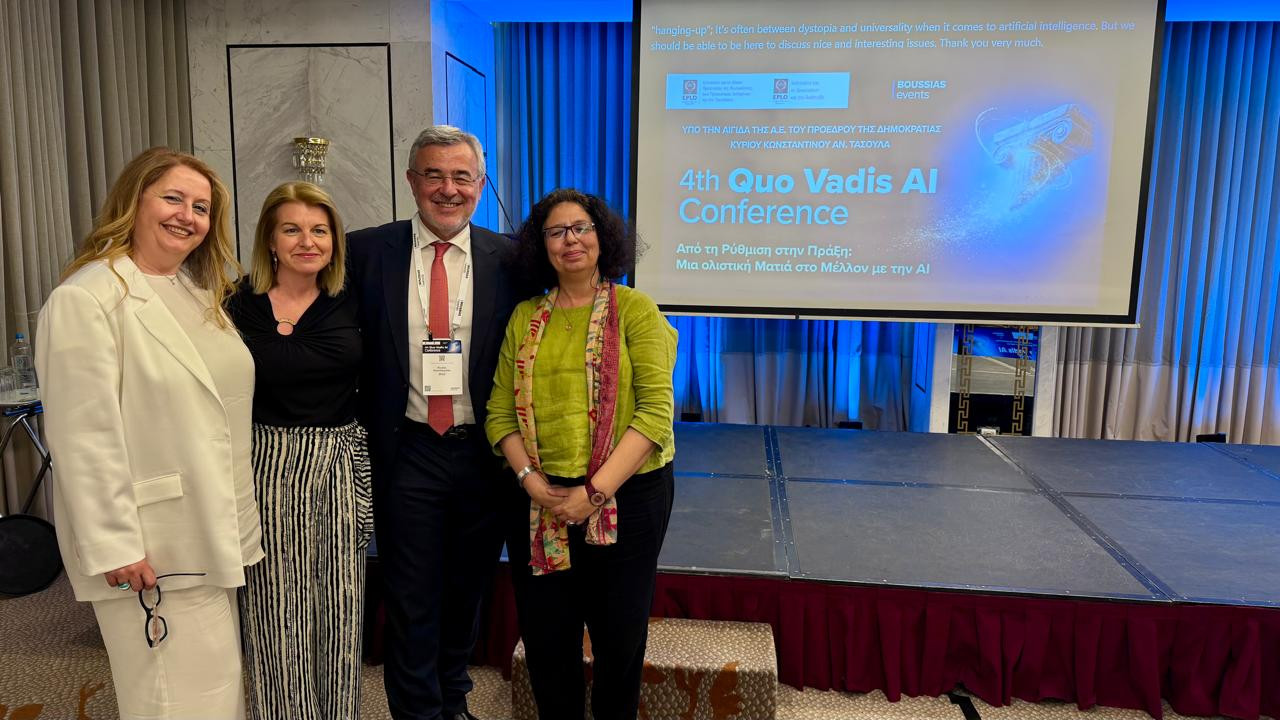
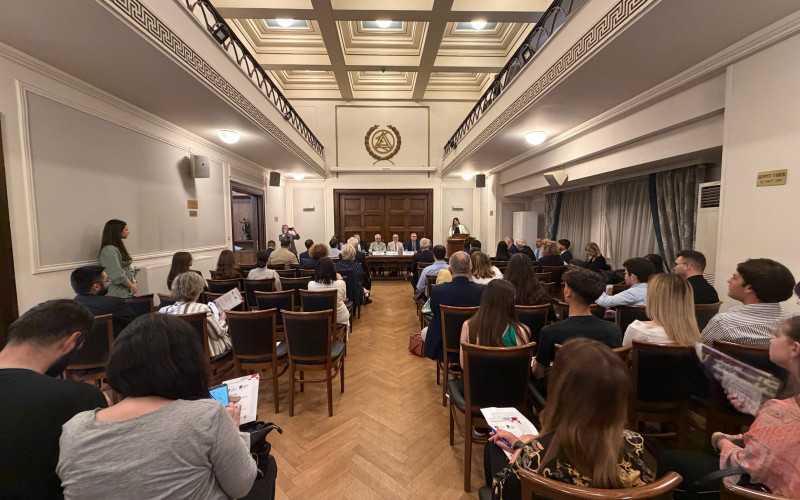
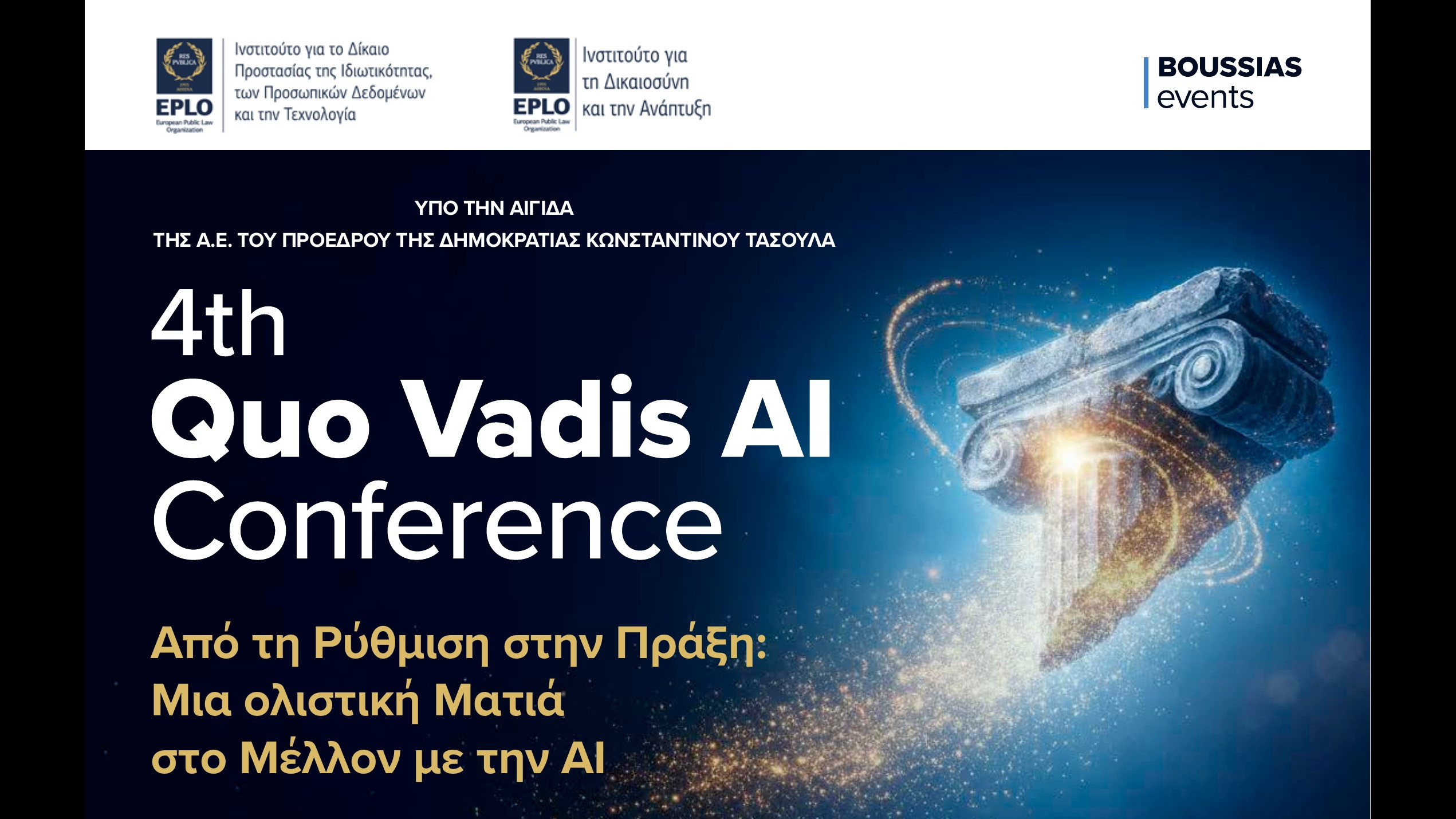
The European Public Law Organization (EPLO) — through its Institute for Privacy, Personal Data Protection and Technology (presided by Professor Lilian Mitrou) and its Institute for Justice and Growth (presided by Nicolas Kanellopoulos) — organized on 4 June 2026 a major high-level dialogue on the future of Artificial Intelligence in Greece and Europe, the 4th “Quo Vadis AI?” Conference. Held under the auspices of H.E. the President of the Hellenic Republic Konstantinos Tasoulas, the conference brought together leading representatives of government, academia, the private sector, and the technology community for an in-depth discussion on the institutional, ethical, and societal transformations driven by AI.
The event explored the challenges and opportunities of the new AI era, focusing on governance, regulation, innovation, and the impact of emerging technologies on public administration, labour markets, financial systems, and democratic institutions.
Opening Session & Institutional Context
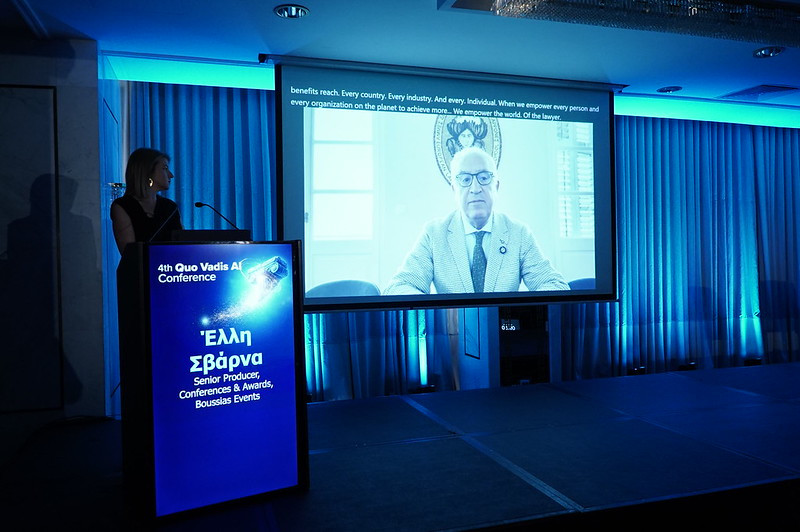
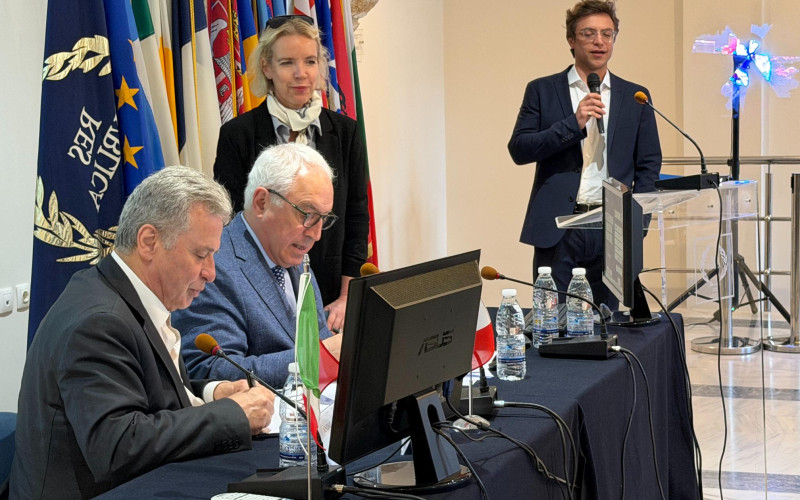
The conference was launched with a welcome address by Professor Spyridon Flogaitis, Director and President of the Board of EPLO, who — joining remotely — underscored the Organization’s commitment to addressing the most pressing global challenges posed by artificial intelligence. Professor Flogaitis acknowledged the personal contribution of Professor Lilian Mitrou and Nicolas Kanellopoulos in conceiving and organizing the conference and expressed confidence that the fourth edition of the Quo Vadis AI? series would yield significant conclusions for policy and society.
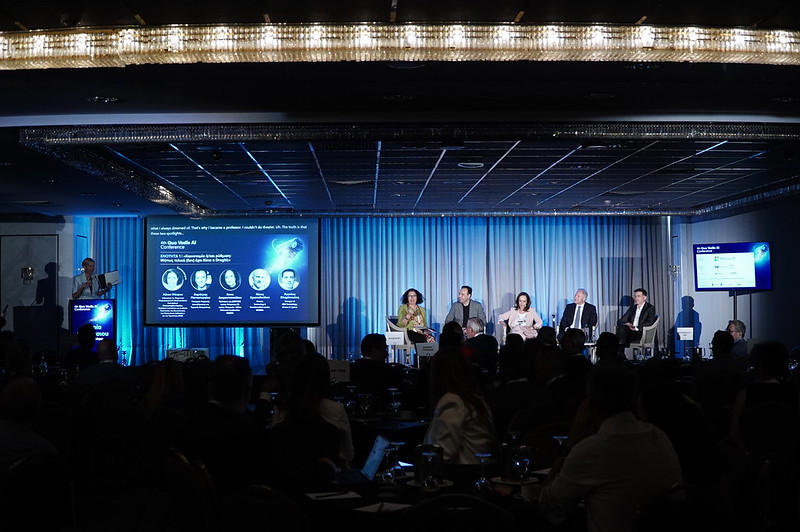
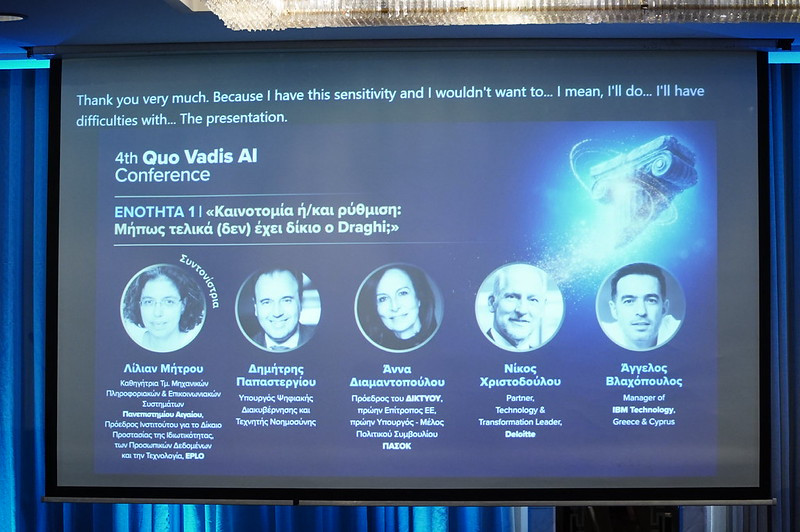
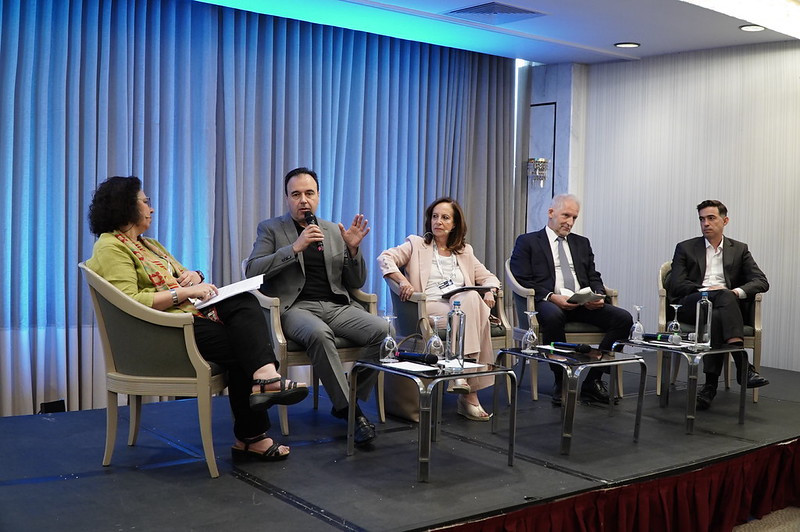
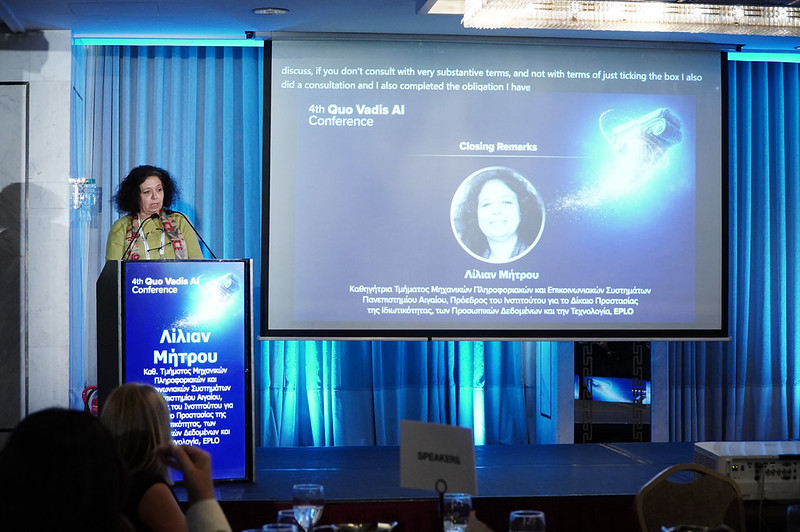
Professor Lilian Mitrou, in her capacity as President of the EPLO Institute for Privacy, Personal Data Protection and Technology, served as the Scientific Director and overall coordinator of the conference. She also moderated the opening panel — “Innovation or/and Regulation: Is Draghi Right After All?” — setting the intellectual framework for the day’s discussions by examining the European Commission’s strategic shift toward combining regulation with active investment in technology production, and the ongoing debate between regulatory rigour and innovation-friendly simplification. Prof Mitrou also delivered the closing remarks synthesizing the day’s conclusions.
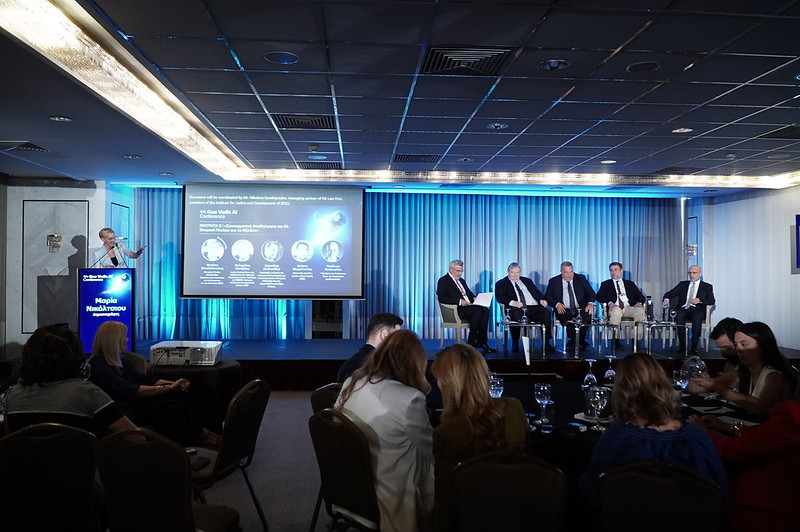
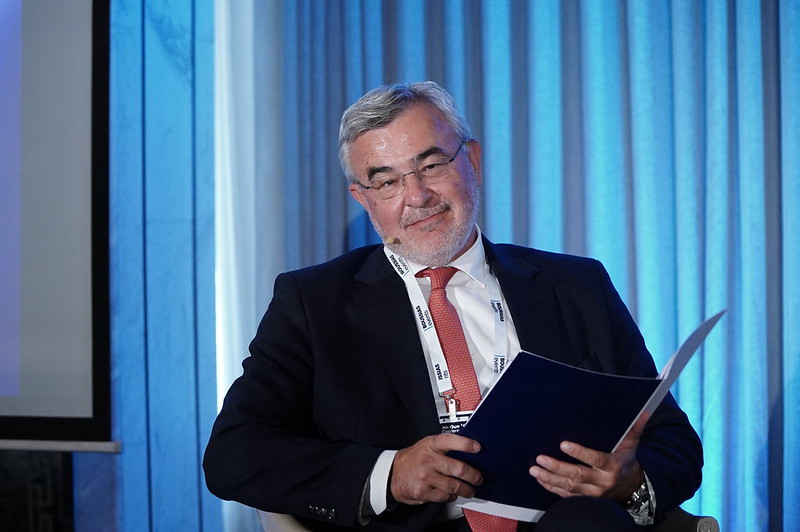
Nicolas Kanellopoulos, in his capacity as President of the EPLO Institute for Justice and Growth and Executive Director of the Institute for Privacy, Personal Data Protection and Technology, apart from the overall coordination with Prof. Mitrou, contributed to the Constitutional and rule-of-law dimension by coordinating the closing panel on "Constitutional Review and AI: Institutional Framework for the Future" — a session that examined the proposed constitutional revision (Article 5) and the safeguards needed to protect fundamental rights in the algorithmic age.
The programme adopted a holistic approach, addressing AI’s impact not only on technology but also on the economy, competitiveness, labour, social stratification, democracy, fundamental rights, cybersecurity, governance, and institutional futures. Speakers emphasized the importance of cross-sector collaboration and the role of Greece and Europe in shaping global AI standards.
Keynote Interventions, Panel Discussions & Thematic Sessions
The programme featured contributions from senior policymakers and internationally recognized experts Their interventions addressed topics such as AI regulation, digital transformation, cybersecurity, labour-market adaptation, long-term planning, and the ethical and legal implications of algorithmic decision-making.
The conference was structured around five thematic sessions, each addressing a critical dimension of AI governance:
• Unit 1 — “Innovation or/and Regulation: Is Draghi Right After All?” — featuring Minister of Digital Governance Dimitris Papastergiou, former EU Commissioner Anna Diamantopoulou, Nikos Christodoulou (Deloitte), and Angelos Vlachopoulos (IBM). Coordinated by Professor Lilian Mitrou (EPLO).
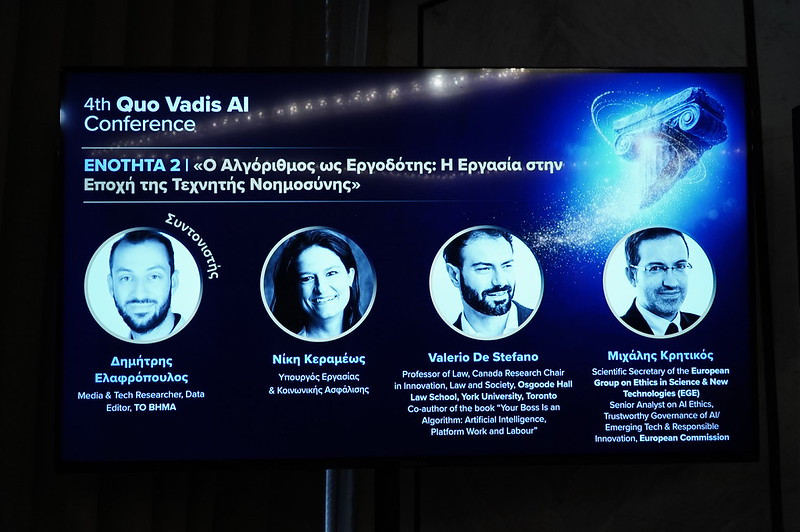
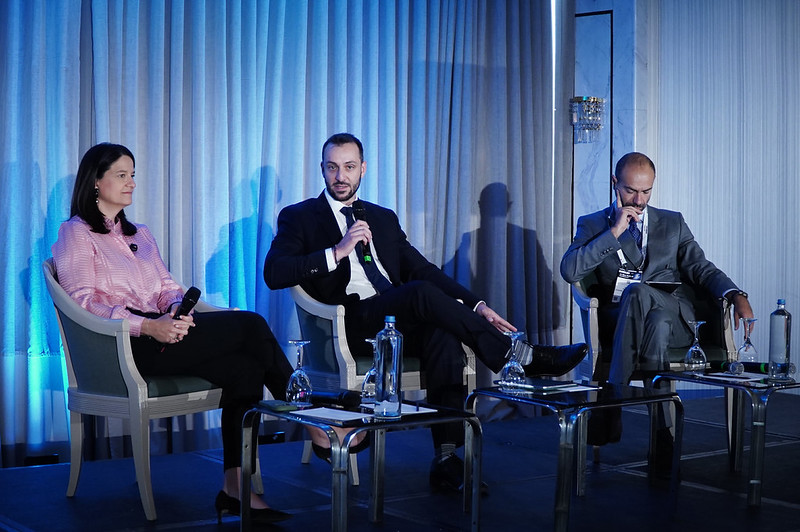
• Unit 2 — “The Algorithm as Employer: Labour in the Age of Artificial Intelligence” — featuring Minister of Labour Niki Kerameus, Professor Valerio De Stefano (York University, author of "Your Boss Is an Algorithm"), and Michalis Kritikos (European Commission, AI Ethics). Moderated by Dimitris Elafropoulos (TO VIMA).
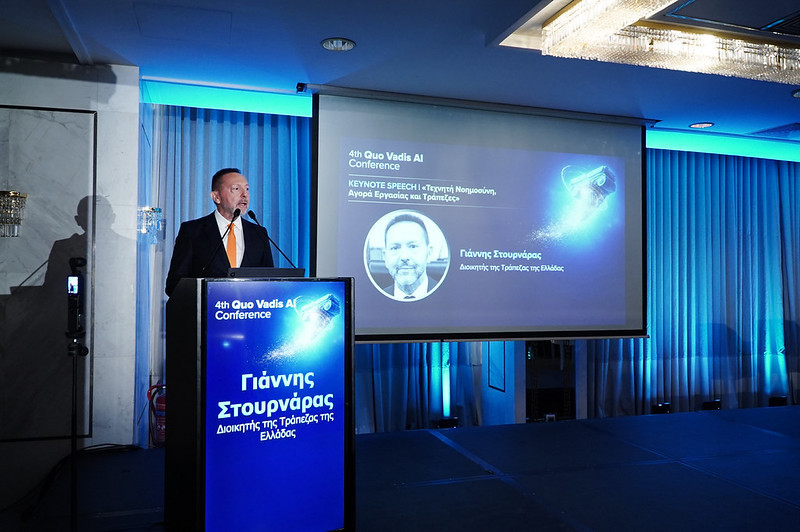
• Keynote Speech — “Artificial Intelligence, Labour Market and Banks” — by Yannis Stournaras, Governor of the Bank of Greece, addressing stagflation risks, the Solow paradox, AI’s transformative impact on financial systems, and the need for democratic accountability in algorithmic decision-making.
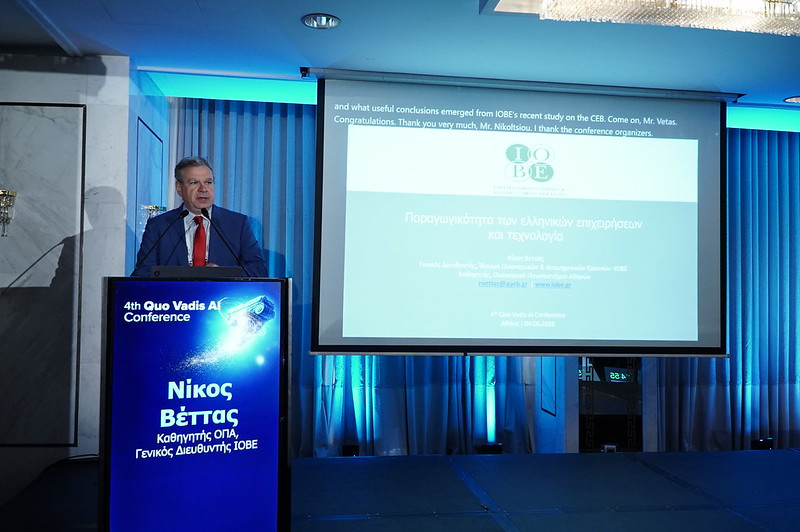
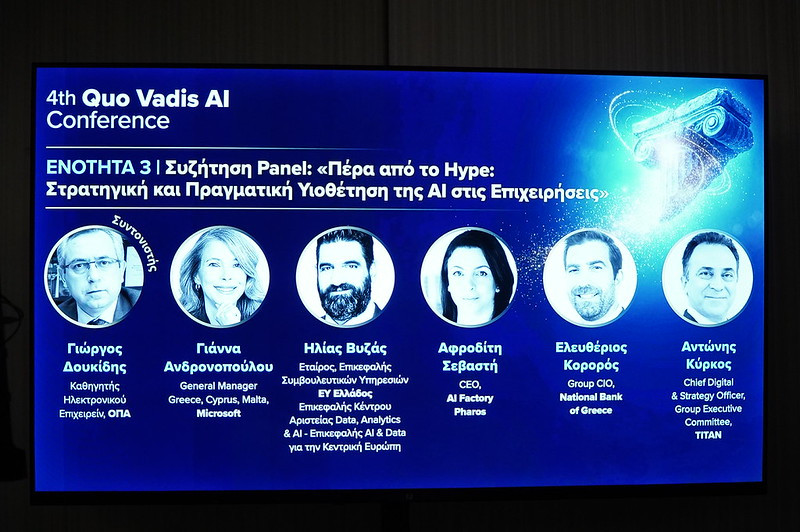
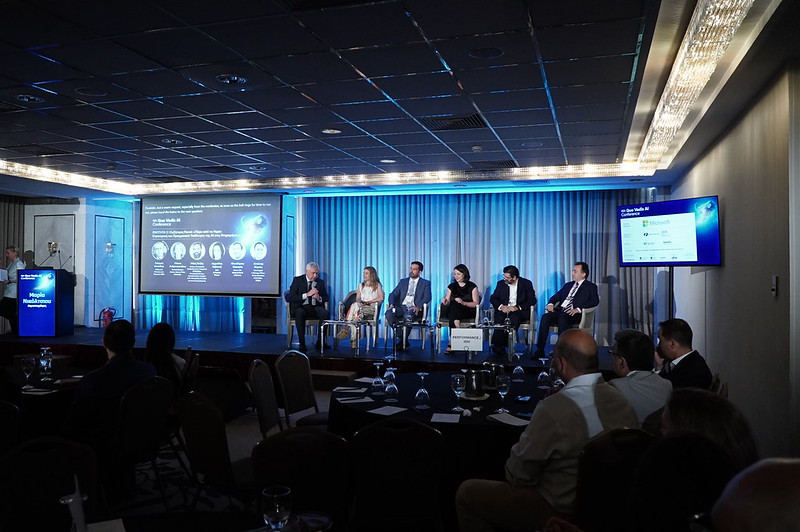
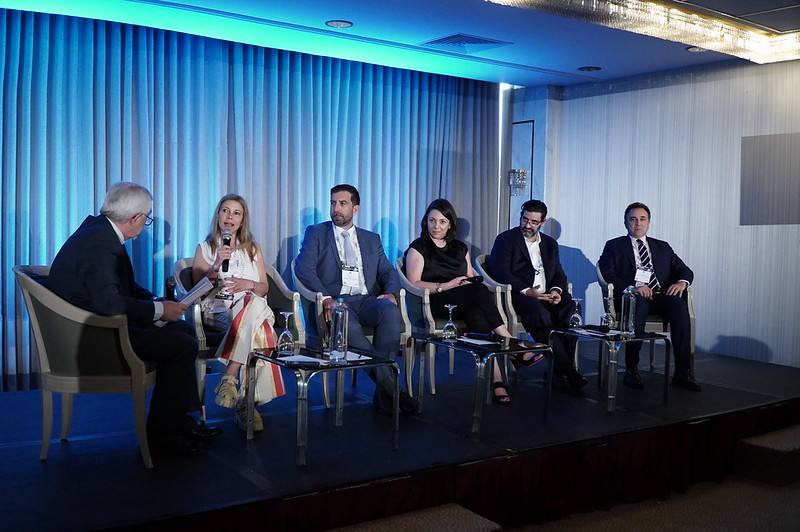
• Unit 3 — “Beyond the Hype: Strategy and Real AI Adoption in Business” — with a presentation by Professor Nikos Vettas (IOBE) on productivity, followed by a panel featuring Gianna Andronopoulou (Microsoft), Ilias Vyzas (EY), Afroditi Sevasti (AI Factory Pharos), Eleftherios Kororos (National Bank of Greece), and Antonis Kyrkos (TITAN). Moderated by Professor Georgios Doukidis (Athens University of Economics).
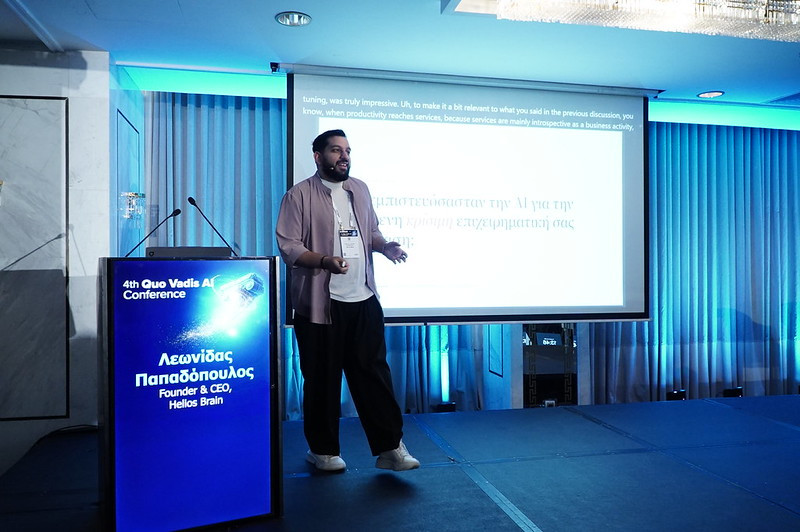
• Start-up Spotlight — “Would You Trust AI for Your Next Critical Business Decision?” — featuring Leonidas Papadopoulos, Founder & CEO of Helios Brain, presenting the challenges of trustworthy AI adoption in enterprise decision-making.
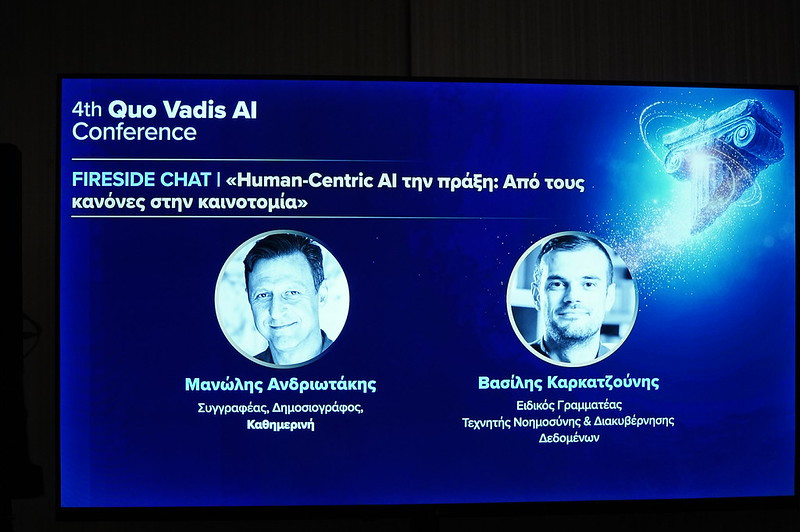
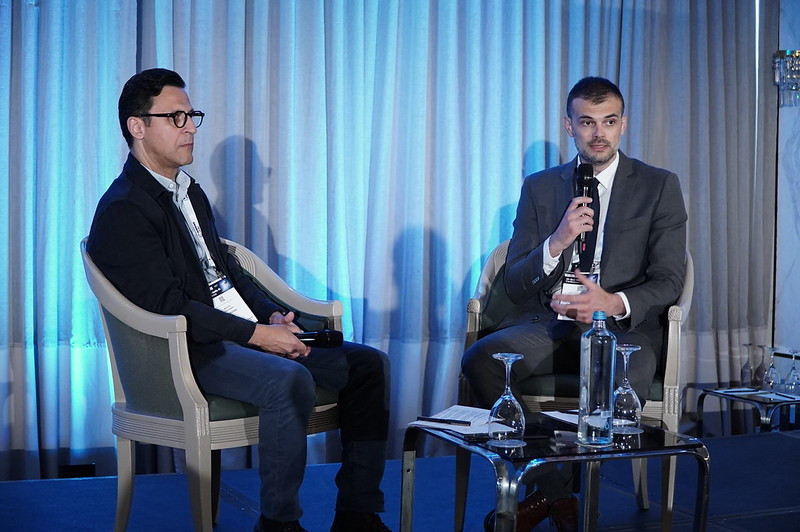
• Fireside Chat — “Human-Centric AI in Practice: From Rules to Innovation” — with Vasilis Karkatzounis, Special Secretary for AI and Data Governance, discussing the national AI Act, pilot projects with Mistral AI, and the five-pillar strategy of the Special Secretariat. Moderated by Manolis Andriotakis (Kathimerini).
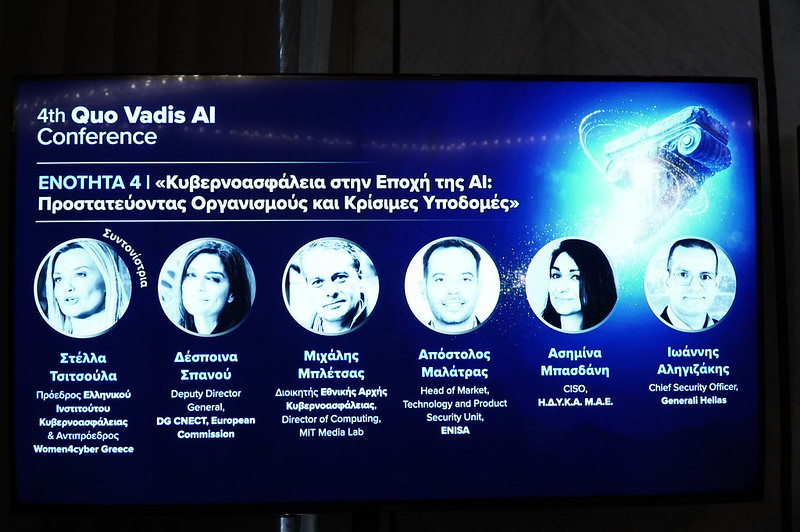
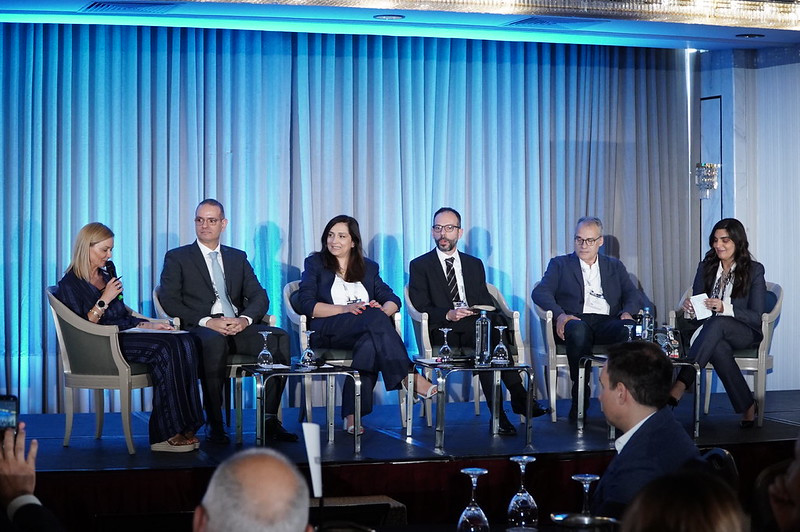
• Unit 4 — “Cybersecurity in the Age of AI: Protecting Organizations and Critical Infrastructures” — featuring Despina Spanou (Deputy Director General, DG CNECT, European Commission), Michalis Bletsas (Governor, National Cybersecurity Authority), Apostolos Malatras (ENISA), Asimina Basdani (CISO, IDIKA), and Giannis Aligizakis (Chief Security Officer, Generali Hellas). Moderated by Stella Tsitsoula (Hellenic Institute of Cybersecurity).
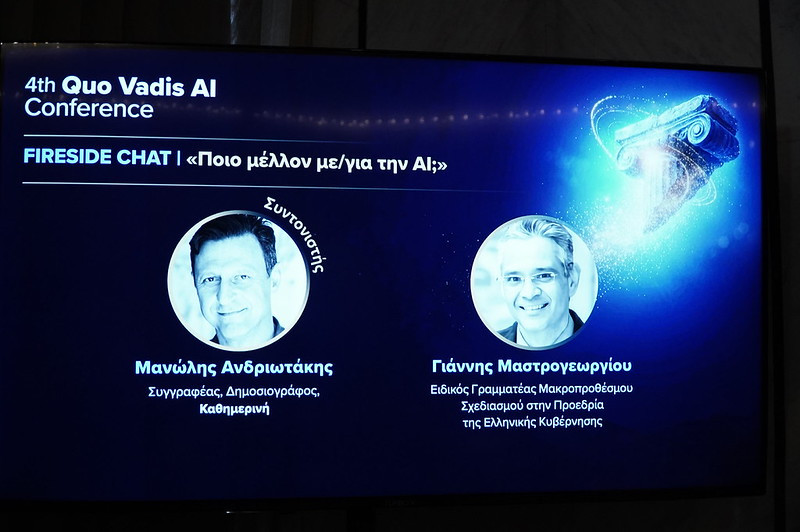
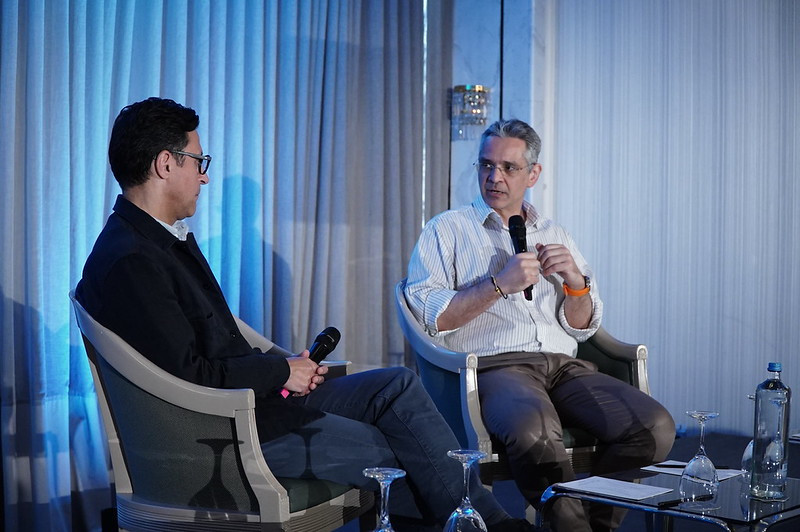
• Fireside Chat — “What Future with/for AI?” — with Giannis Mastrogeorgiou, Special Secretary for Long-Term Planning at the Presidency of the Government, exploring the Solow paradox, global power concentration, interdisciplinarity, and the ethical boundaries of AI. Moderated by Manolis Andriotakis (Kathimerini).
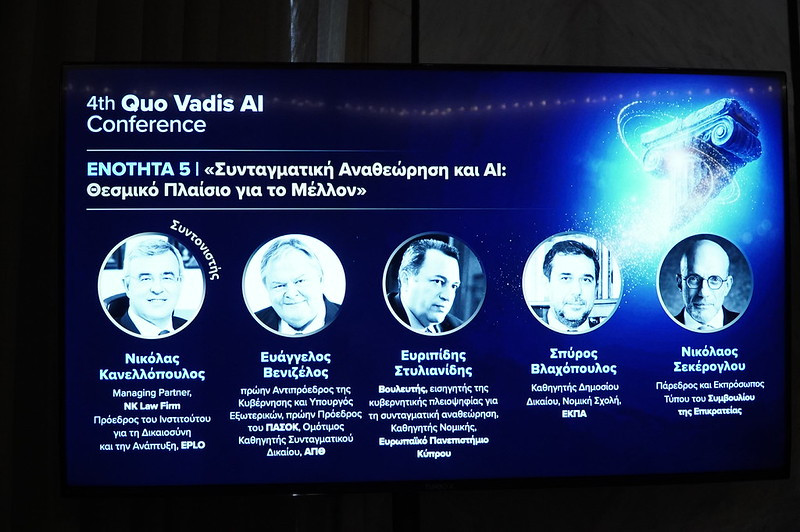
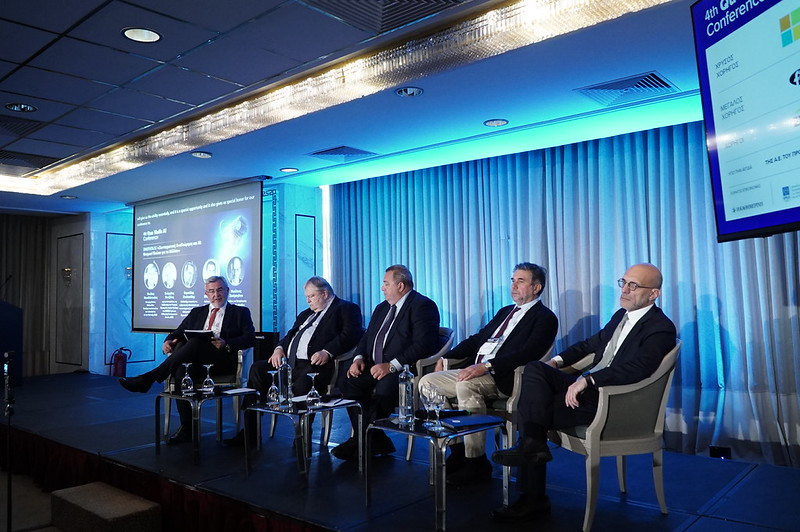
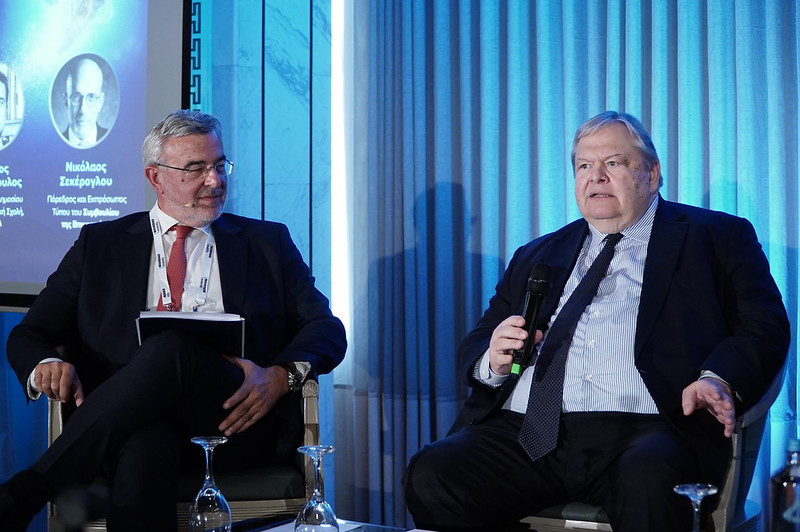
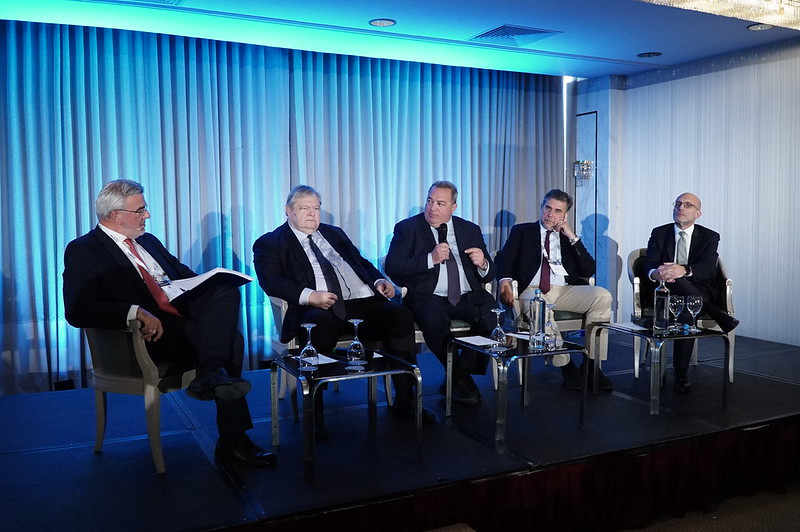
• Unit 5 — “Constitutional Review and AI: Institutional Framework for the Future” — featuring former Deputy Prime Minister Evangelos Venizelos, MP Evripidis Stylianidis (rapporteur for constitutional revision), Professor Spyros Vlachopoulos, and Nikolaos Sekkeroglou (Council of State). Coordinated by Nicolas Kanellopoulos (EPLO).
Speakers highlighted the need for trustworthy AI systems, robust oversight mechanisms, and interdisciplinary cooperation to ensure that technological progress aligns with democratic values and societal needs.
A Platform for Institutional Dialogue
Launched six years ago and now in its fourth edition, the “Quo Vadis AI?” Conference has consistently anticipated major policy milestones — from the European Commission’s White Paper on AI and the 2022 proposal for AI regulation to the adoption of the Artificial Intelligence Act — and has established itself as the central annual forum for AI governance in Greece. The conference offers policymakers, academics and industry leaders the opportunity to exchange insights and shape the national and European agenda on artificial intelligence, public law and democratic governance.
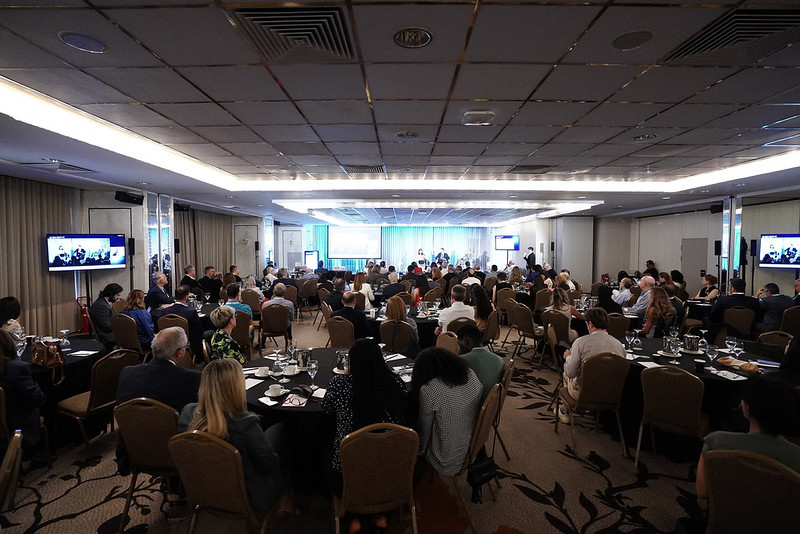
This year’s edition brought together two government ministers, the Governor of the Bank of Greece, senior officials from the European Commission and ENISA, Special Secretaries from the Presidency of the Government and the Ministry of Digital Governance, members of parliament, leading academics from Greece and abroad and C-suite executives from major technology and financial institutions. The breadth and seniority of participation underscored the conference’s standing as a uniquely authoritative platform where regulatory, academic and industry perspectives converge.
The 4th Quo Vadis AI? Conference reaffirmed EPLO’s commitment to fostering informed, evidence-based and interdisciplinary dialogue on the future of Artificial Intelligence. At a moment when the EU AI Act enters its operational phase, when Greece prepares its first national AI legislation and when constitutional revision proposals explicitly address algorithmic governance for the first time, the Organization’s role as a bridge between European legal scholarship and national policy implementation has never been more relevant. EPLO will continue to serve as a catalyst for institutional innovation, ensuring that the rapid evolution of AI technology is met with equally robust frameworks of accountability, transparency and respect for fundamental rights.
*The conference was organized in cooperation with Boussias (https://aiconference.boussiasevents.gr)