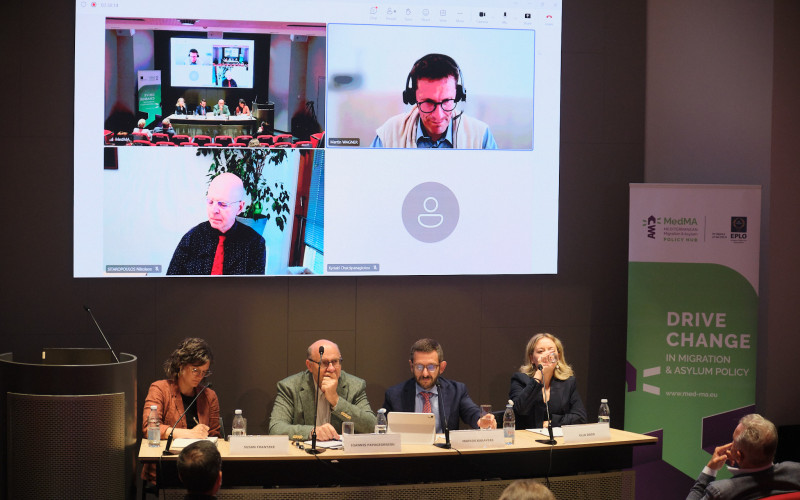
On 4 February 2026, the second peer-learning webinar of the FOODGaP Capacity Building Programme was successfully held online, led by the Institute for Sustainable Development - EPLO with the support of Città metropolitana di Roma Capitale and CIHEAM Bari as lead partner.
The session focused on Multilevel Governance, Participation and Vertical Coordination as foundational elements of effective food policy .
The discussion highlighted a shared understanding among speakers and participants that food policy effectiveness depends less on individual measures and more on how governance systems operate in practice. Across different territorial and institutional contexts, challenges were linked primarily to coordination gaps across governance levels, clarity of mandates, structured participation, and institutional continuity.
Key contributions included:
Mr. Spyros Kouvelis (ISD EPLO Founder & Director), who emphasised multilevel governance as a prerequisite for impact, underlining the need for clear role allocation, structured coordination, and long-term institutional continuity.
Dr. Stefanos Fotiou (Director, FAO & UN Food Systems Coordination Hub), who addressed vertical governance between city–region–state levels, stressing that effective governance aligns decision rights, financing, and accountability, while embedding participation into formal decision-making pathways.
Dr. Rosário Oliveira (University of Lisbon), who presented the Lisbon Metropolitan Area as a governance bridge connecting municipalities, research institutions, and civil society.
Mr. Florent Yann Lardic (Director, Terres en villes), who shared the French experience of Territorial Food Projects (PAT) as a model of institutionalised participation and inter-municipal cooperation.
The event concluded with an engaging Q&A session facilitated by Ms. Christina Deligianni (Policy and Programs Directo, ISD EPLO), linking food governance to the UN 2030 Agenda, the SDGs, and the EU Green Deal.
The webinar concluded that participation, coordination, and governance architecture are not secondary considerations but core structural conditions for coherent, inclusive, and sustainable food systems.
The webinar was dedicated to the memory of Şadiye Karabudak, a valued colleague and Project Expert from the #MetropolitanCityofMersin, whose commitment to participatory governance and local food policy made a lasting contribution to the FOODGaP project.
Read the chronicle and key insights from the discussion by downloading the full document above.
Learn more about FOODGaP: https://eplo.int/en/foodgap-food-governance-and-policies-at-local-level