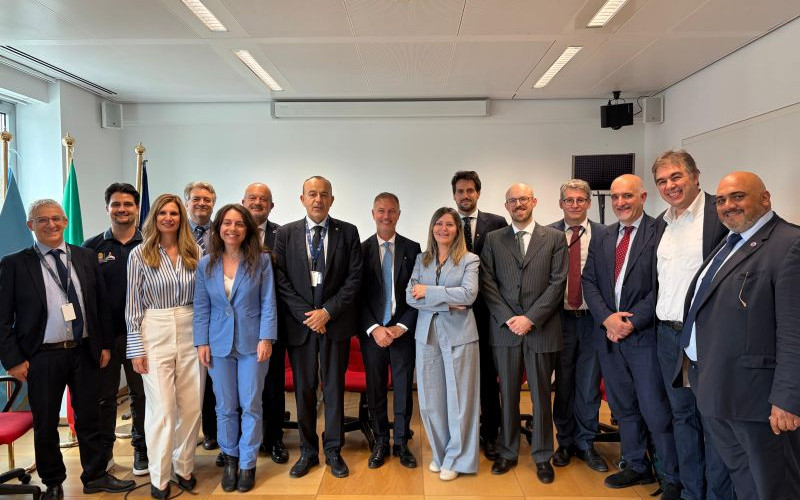
Drop all preconditions and start parallel talks simultaneously on freeing the Middle East of nuclear and other weapons of mass destruction and negotiating an end to the Palestine crisis. This was one of the main conclusions of the November 14-16 Athens Dialogue which brought together Israeli, Palestinian, Arab, Iranian and other Middle Eastern civil society leaders, former diplomats, and some diplomatic representatives.
The dialogue meeting, attended by some 40 participants, was hosted and facilitated by the La Trobe University Centre for Dialogue (Melbourne) and the Athens-based European Public Law Organization. Its aim was to support the proposed Helsinki meeting on a Middle East free of weapons mass destruction, sponsored jointly the UN, United States, United Kingdom and Russian Federation and likely to take place later this year or early next year.
The gathering of Middle East representatives was marked by extraordinary respect and empathy between participants coming from the areas of conflict. Using the dialogue method developed and refined over many years by the Centre for dialogue, the meeting generated a range of connections, new opportunities for networking and new ideas on ways forward for Middle Eastern governments and communities.
Proposals emerging out of the Dialogue included new confidence-building measures to promote Middle East denuclearization, new regional structures to pursue such denuclearization, and new civil society initiatives to encourage Middle Eastern governments to pursue negotiations. A particular proposal was the establishment of a UN Regional Centre for Peace and Security to match similar centres in other conflict-prone regions of the world.
The Athens Dialogue outcomes and possible next steps will be published and available online from mid-December.
Casting a shadow over the dialogue were the tragic events unfolding in Gaza and Israel. Yet, though emotions were strong, and many were preoccupied by these events, all participants were nonetheless committed to the idea of establishing such a zone, and to the need for practical meaningful steps to be taken over the coming 12 to 18 months. The meeting was unanimous in its view that the anticipated Helsinki Conference should proceed as planned, and if humanly possible in December 2012.
For further information, contact:
Prof Joseph A. Camilleri, Director, Centre for Dialogue, La Trobe University, Email:J.Camilleri@latrobe.edu.au ; Tel: +61 3 9379 3889