

Established in close cooperation with the Brčko District Authorities and supported by the Office of the High Representative, the EPLO has been active in the region since 2000.
Initially focused on supporting the unification of the judiciary and the institution-building of the Brčko District Assembly, the EPLO continues to play a key role in strengthening governance and public administration in Bosnia and Herzegovina—particularly in the context of the country’s accession process to the European Union. Since December 2022, Bosnia and Herzegovina has held EU candidate status, and in March 2024, the European Council formally decided to open accession negotiations, marking a significant step forward in the country’s European integration.
EPLO Engagement in the Brčko District
The European Public Law Organization (EPLO) has played a pivotal role in supporting institutional development and democratic governance in the Brčko District of Bosnia and Herzegovina. In close cooperation with the international community—particularly the Office of the High Representative—the EPLO has implemented a series of targeted projects, mobilizing international experts and engaging local stakeholders across sectors.
Legislative Support and Capacity Building
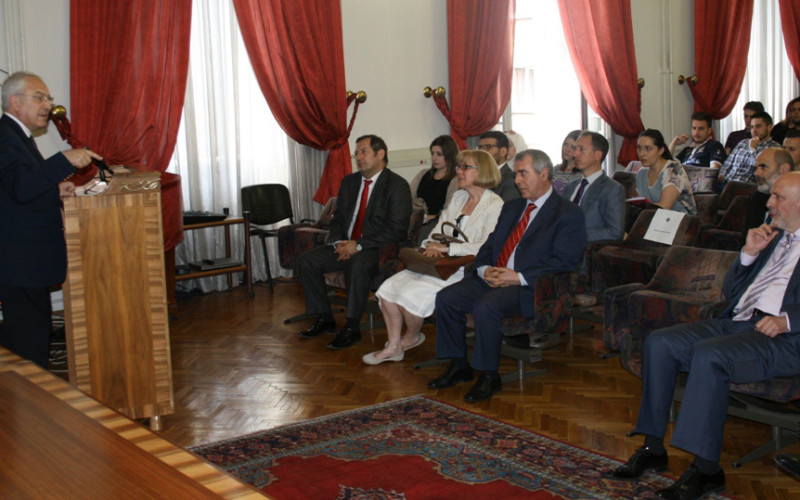
EPLO experts contributed to the institution-building process by delivering seminars to Assembly Councilors, tailored to the evolving legislative needs of the District. These included:
- Harmonization with the acquis communautaire, during a critical period of legislative reform.
- Training on legislative drafting, encouraging Councilors to proactively contribute to the codification process. This led to the adoption of the Law on Councilors.
- Workshops on economic and human rights dimensions of legislation, including sessions on Freedom of Speech and Council of Europe standards for police legislation.
The EPLO also reviewed and proposed amendments to the Rules of Procedure of the Brčko District Assembly, improving scheduling, deadlines, and operational efficiency. These changes were formally adopted and remain in effect.
E-Governance and Technological Innovation
Recognizing the importance of digital transformation, the EPLO organized seminars on e-governance and the use of modern technologies in public service delivery. Councilors were introduced to emerging IT solutions and encouraged to adapt legislation to future technological trends.
Study Visits and International Exposure
To foster comparative learning, the EPLO organized study visits for Brčko stakeholders to leading European institutions, including:
The European Commission, European Parliament, European Investment Bank, European Court of Human Rights, European Court of Justice, and others.
Additional visits were arranged to Greek institutions such as:
The Mayor of Athens, Hellenic Parliament, Ministry of Interior, Office of the Ombudsman, Ministry of Economy and Finance, and the National School for Public Administration.
These exchanges strengthened institutional ties and exposed participants to best practices in governance and public administration.
Tax Reform and Economic Development
The EPLO supported the Brčko District Tax Administration through seminars and study visits focused on EU taxation models. These efforts aimed to modernize local practices and stimulate the economy by introducing tested solutions from EU member states.
Judicial Reform and Access to Justice
In the judiciary, the EPLO contributed to the development of a new Book of Rules on Internal Organization, including a full list of administrative positions. Manuals were created to streamline operations, and digital sound-recording of court hearings was introduced to enhance transparency and access to justice.
Training sessions for administrative staff focused on the Code of Conduct, ensuring high-quality service delivery. The EPLO also championed mediation as a tool for dispute resolution, helping reduce case backlogs and improve outcomes.
The first Seminar for Court Secretaries, co-organized with the East-West Management Institute, fostered dialogue on court development and inspired innovation across the judiciary.
EU Institutional Seminars
EPLO experts from Greece, Bulgaria, the UK, and the Netherlands delivered five seminars covering:
EU institutional functioning
Anti-corruption policy
Law enforcement cooperation
Immigration policy
Legal impact of EU legislation on national frameworks
Public Administration Reform (2013–2015)
As lead partner in a European Commission-funded project, the EPLO supported the development of central government bodies in Bosnia and Herzegovina. The goal was to enhance administrative capacity in policy development, planning, and coordination—key pillars for EU integration.
The project implemented the Blueprint for Development of Central Bodies, offering concrete recommendations for transforming secretariats at the state, entity, and district levels into full-service institutions aligned with European standards.
Key activities included:
- Legal framework review and drafting of amendments
- Methodology for annual planning and monitoring
- Promotion of coherence and cooperation among secretariats
- Training and workshops for staff in ministries and secretariats
and exposed participants to best practices in governance and public administration.