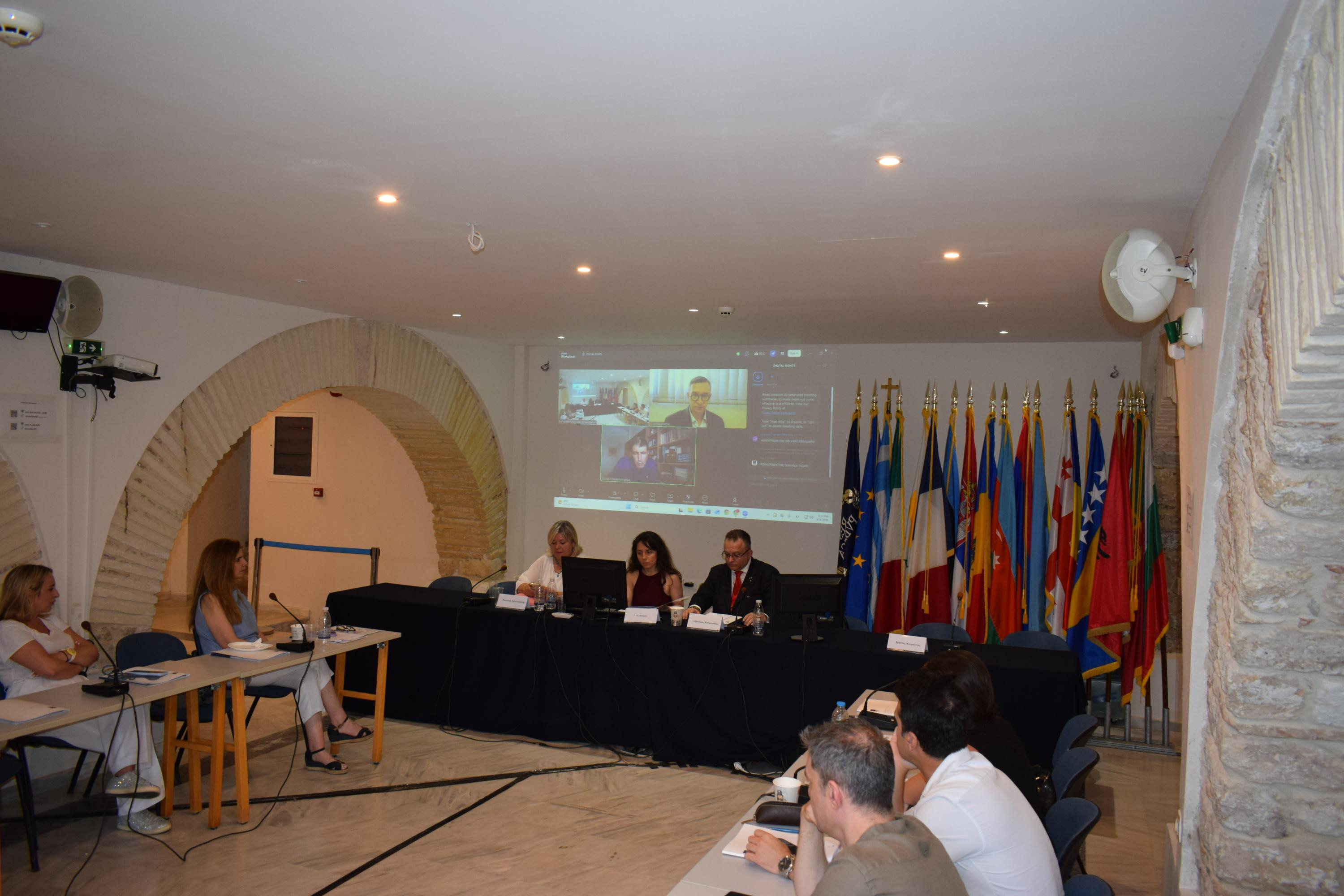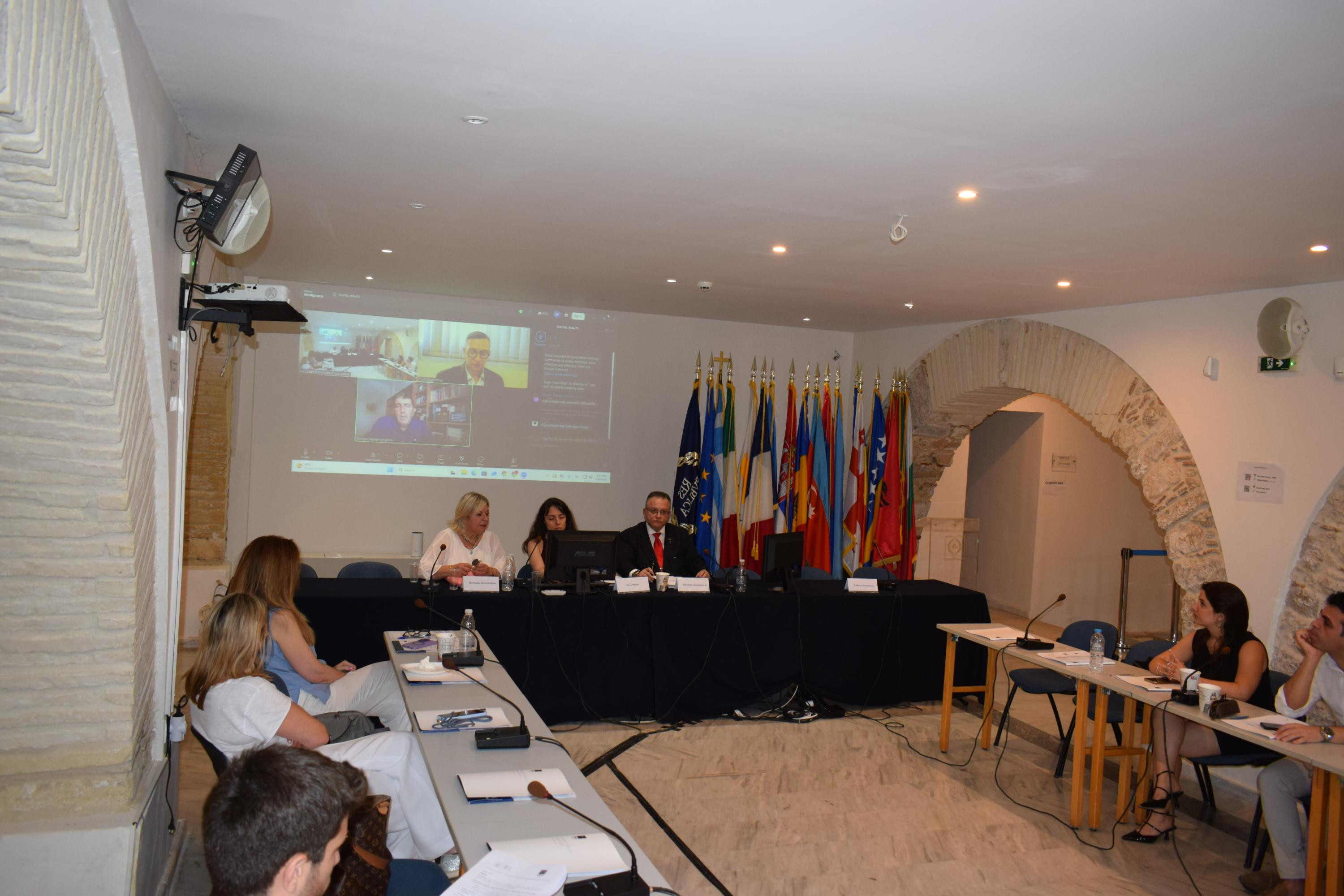
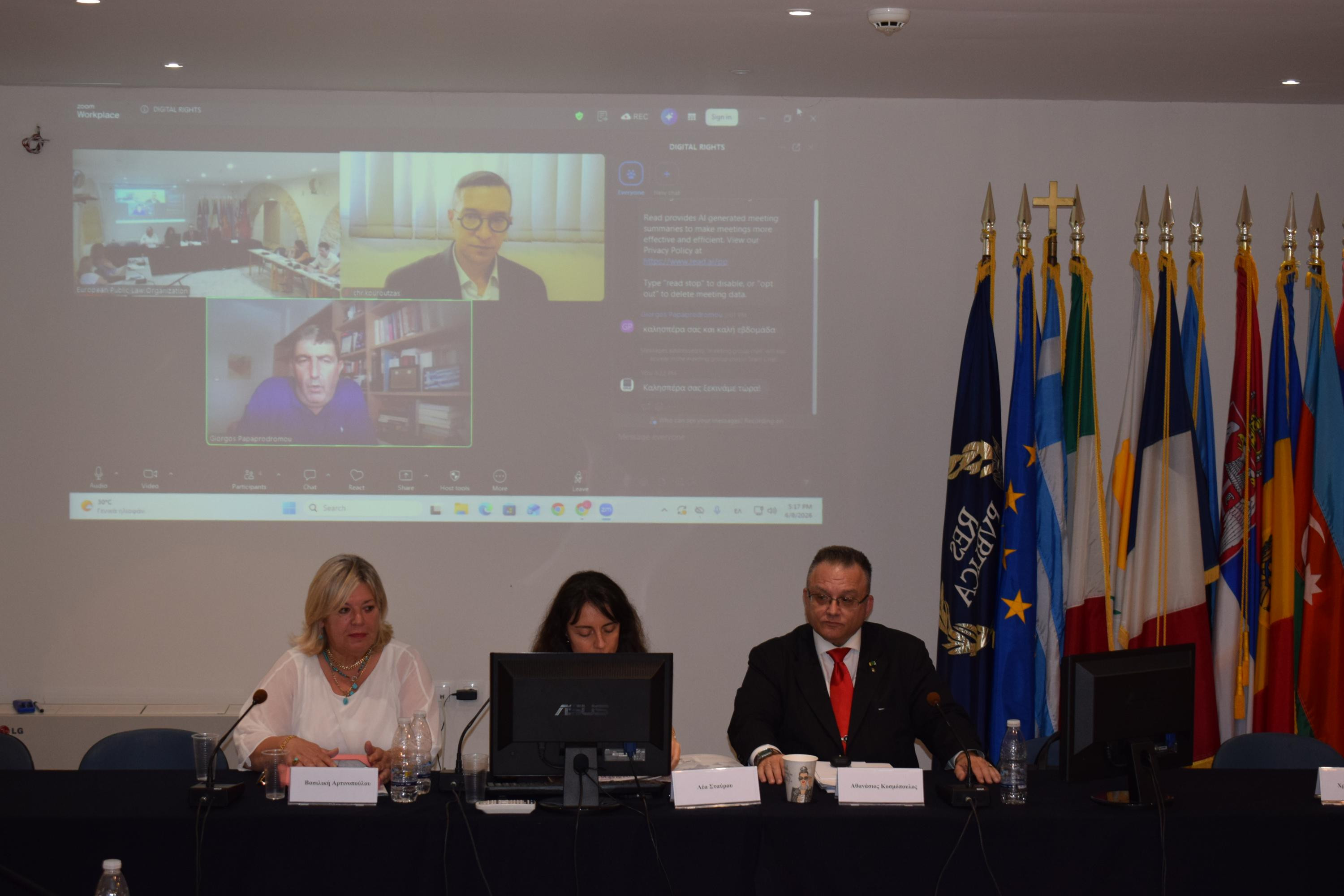
On 8 June 2026, the European Public Law Organization (EPLO) hosted the event “Digital Rights in Criminal Justice: Risks and Mitigation Mechanisms” at its premises in Athens, within the framework of the EU-funded project DIGITAL RIGHTS – New Technologies for Criminal Law.
The event brought together legal professionals, academics, public authorities, and experts in criminal justice to discuss the impact of digital technologies, electronic evidence, digital forensics, and Artificial Intelligence on procedural rights and fair trial guarantees.
Opening remarks were delivered by Prof. Vasiliki Artinopoulou, Scientific Coordinator of the project and Lola Lyberopoulou, Director of EU and International projects at EPLO, while Lea Stavrou, Senior Program Officer at EPLO, presented the DIGITAL RIGHTS project and its Risk Assessment and Mitigation Plan.
The event also featured distinguished contributions from:
Athanasios Kosmopoulos, Data Protection Officer of the Ministry of Digital Governance and Artificial Intelligence who presented the growing use of Artificial Intelligence in criminal investigations and judicial proceedings, focusing on the risks posed to privacy, procedural rights, and fair trial guarantees.
Christos Kouroutzas, Assistant Professor, Department of Sociology, University of the Aegean explored how algorithmic systems can affect fundamental rights within criminal justice processes and he highlighted the risks of bias, discrimination, and limited accountability, advocating for greater scrutiny of the “black box” of algorithmic justice.
The event was honored by the participation of representatives from:
- the Athens Court of Appeal Prosecutor's Office
- the Directorate for Security and Protection of Maritime Borders of the Hellenic Coast Guard
- the Athens Bar Association
The discussion focused on the challenges arising from the use of algorithmic tools, digital forensics, cross-border digital investigations, and AI-supported systems in criminal justice, as well as on mitigation measures and European guidelines for the protection of fundamental rights and the principle of fair trial.
The event concluded with an open discussion, during which participants exchanged views on the safeguards required to ensure that technological innovation in criminal justice remains aligned with the rule of law, transparency, accountability, and the effective protection of procedural rights.
DIgital Rights is an EU funded project coordinated by the Court of Appeal of Venice with EPLO, Agenfor International Foundation , Institut Européen de l'Expertise et de l'Expert,, Unione delle Camere Penali Italiane , HFOV - Hochschule Für Offentliche Verwaltung as partners.