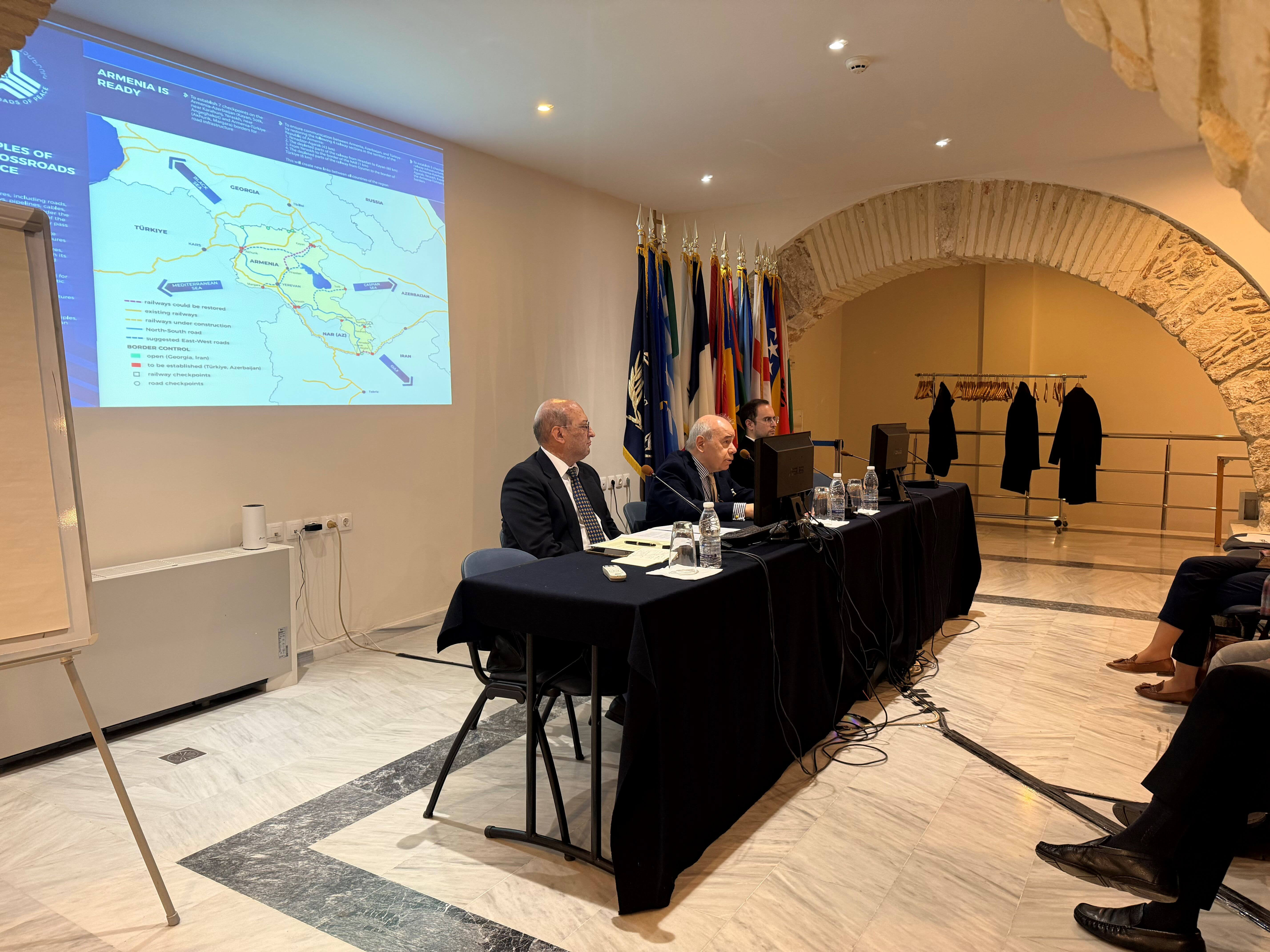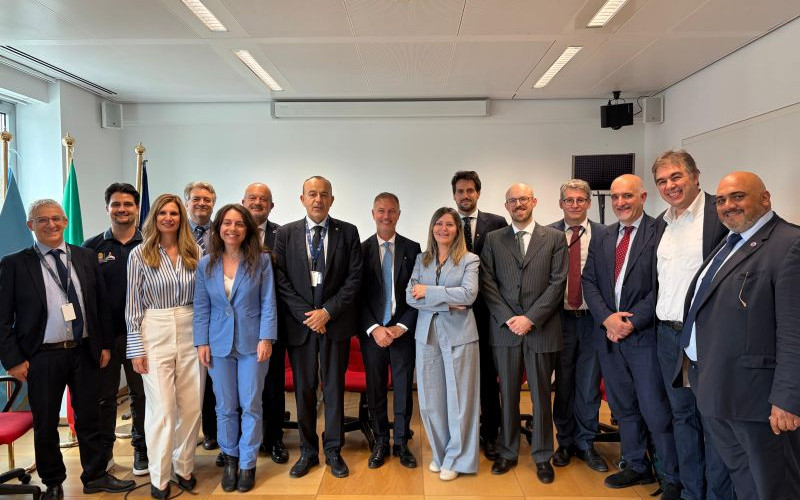
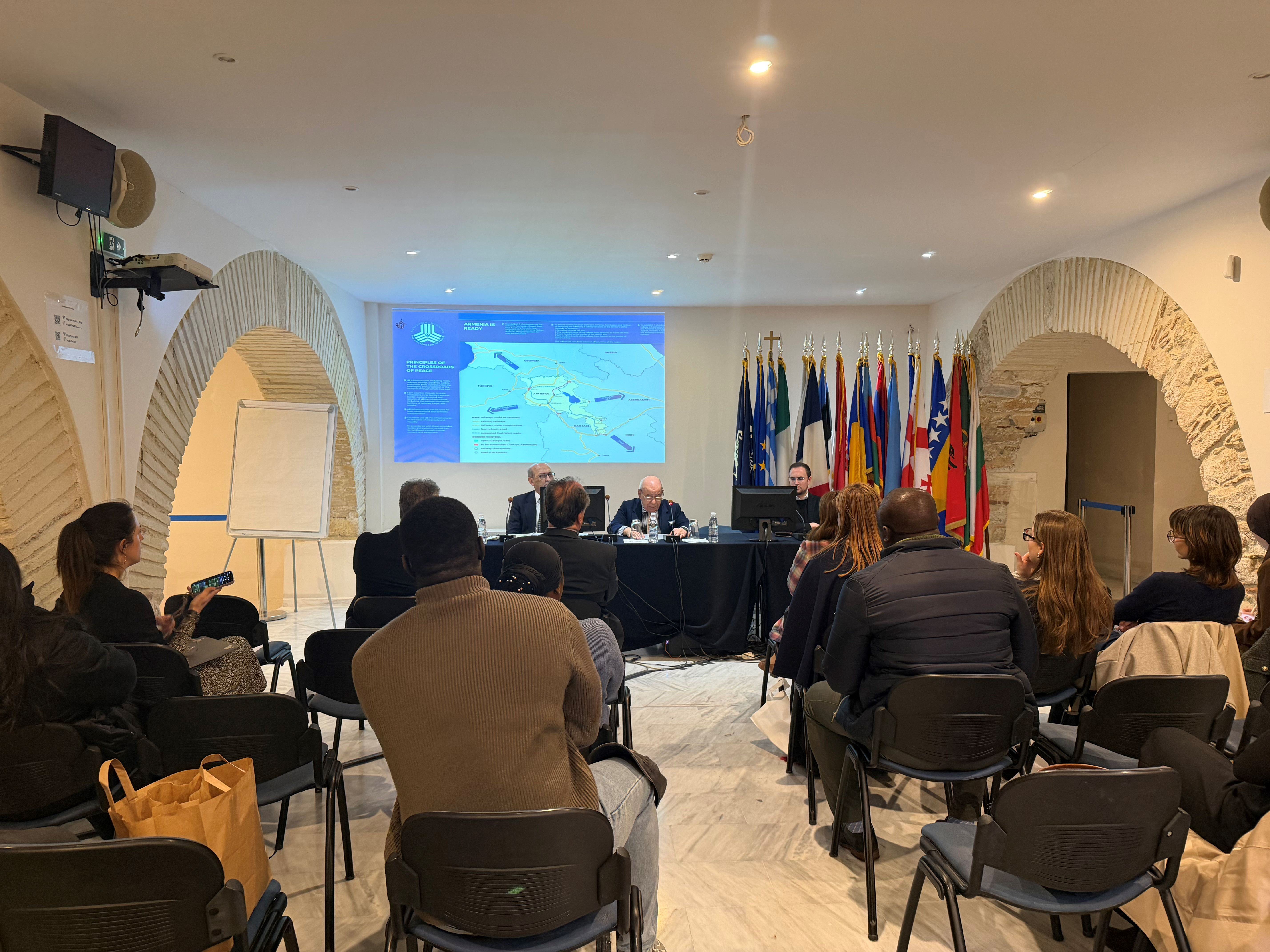
On 17 March 2026, the European Public Law Organization (EPLO) hosted a lecture in Athens on “Armenia’s Foreign Policy Architecture: Opportunities and Challenges”, delivered by H.E. Mr. Tigran Mkrtchyan, Ambassador of the Republic of Armenia to the Hellenic Republic.
The event was open to the public and was also attended by students of the European Law and Governance School (ELGS), alongside EPLO trainees from both the Sounion and Athens offices, who followed the discussion with keen interest.
In his remarks, Ambassador Mkrtchyan offered an insightful overview of Armenia’s foreign policy direction in today’s complex geopolitical environment. Rather than focusing on a single axis, he described Armenia’s approach as one that seeks to balance relationships and cultivate partnerships across multiple regions.
He devoted particular attention to Armenia’s evolving relationship with the European Union, noting how cooperation has deepened significantly in recent years and now carries a clear strategic dimension. These ties, he explained, are closely linked to broader efforts aimed at strengthening institutions, supporting economic progress and advancing democratic governance.
The Ambassador also reflected on Armenia’s relationship with the United States, especially in the area of defence and security, highlighting its importance in enhancing the country’s stability and capacity to respond to regional challenges.
At the same time, he touched upon Armenia’s growing engagement with China and the wider Asian region. In this context, he pointed to Armenia’s emerging role as a potential bridge for trade and connectivity, facilitating the movement of goods between Asia and Europe.
Throughout the lecture, Ambassador Mkrtchyan conveyed both the opportunities and the constraints that shape Armenia’s foreign policy choices today, offering a nuanced perspective on the country’s position within a shifting international landscape.
The discussion concluded with an engaging exchange of questions and reflections, underlining the strong interest of participants in contemporary foreign policy issues.
The event forms part of EPLO’s broader efforts to promote dialogue on international relations and global governance, while creating opportunities for students and young professionals to interact with members of the diplomatic community.