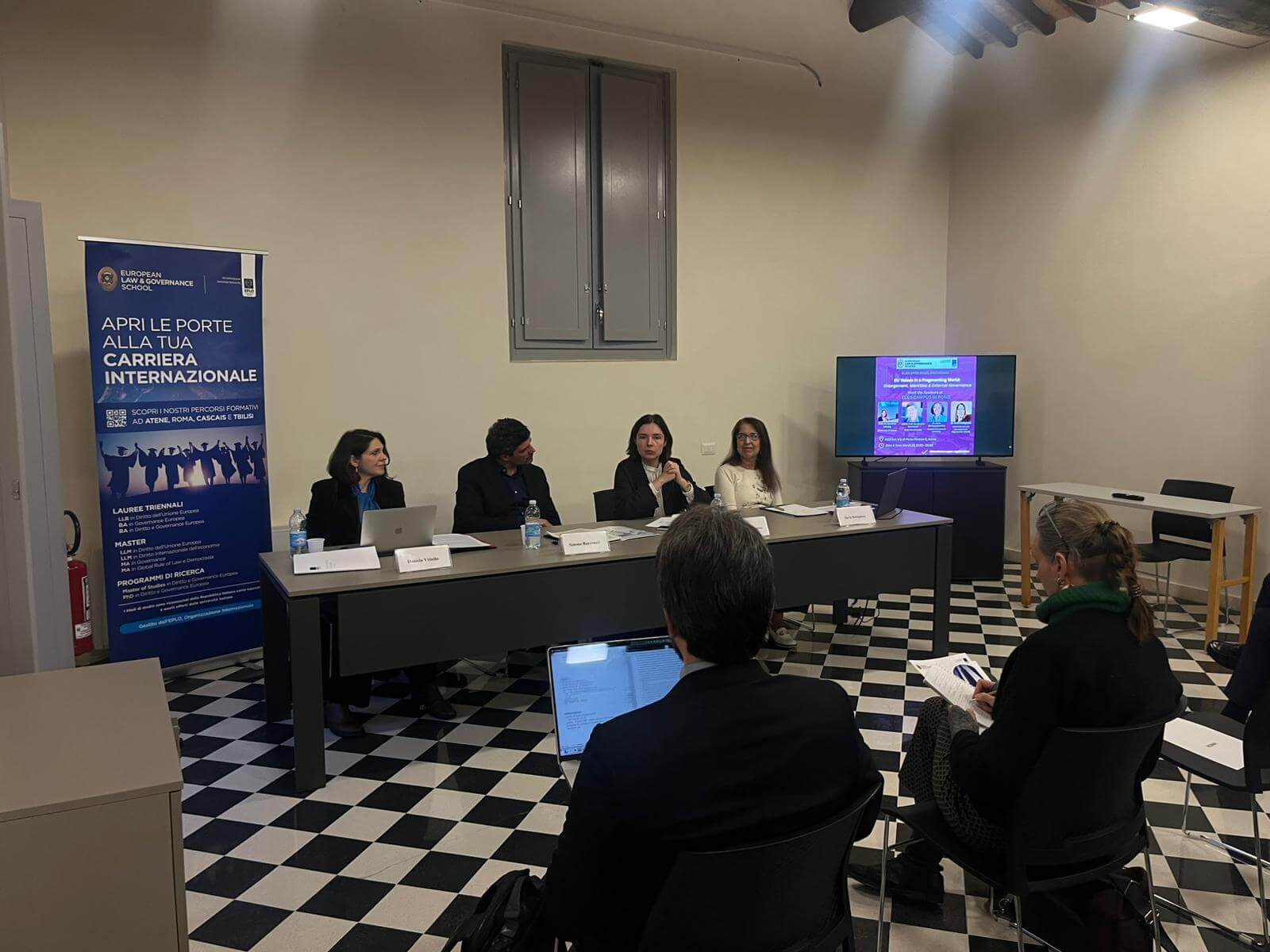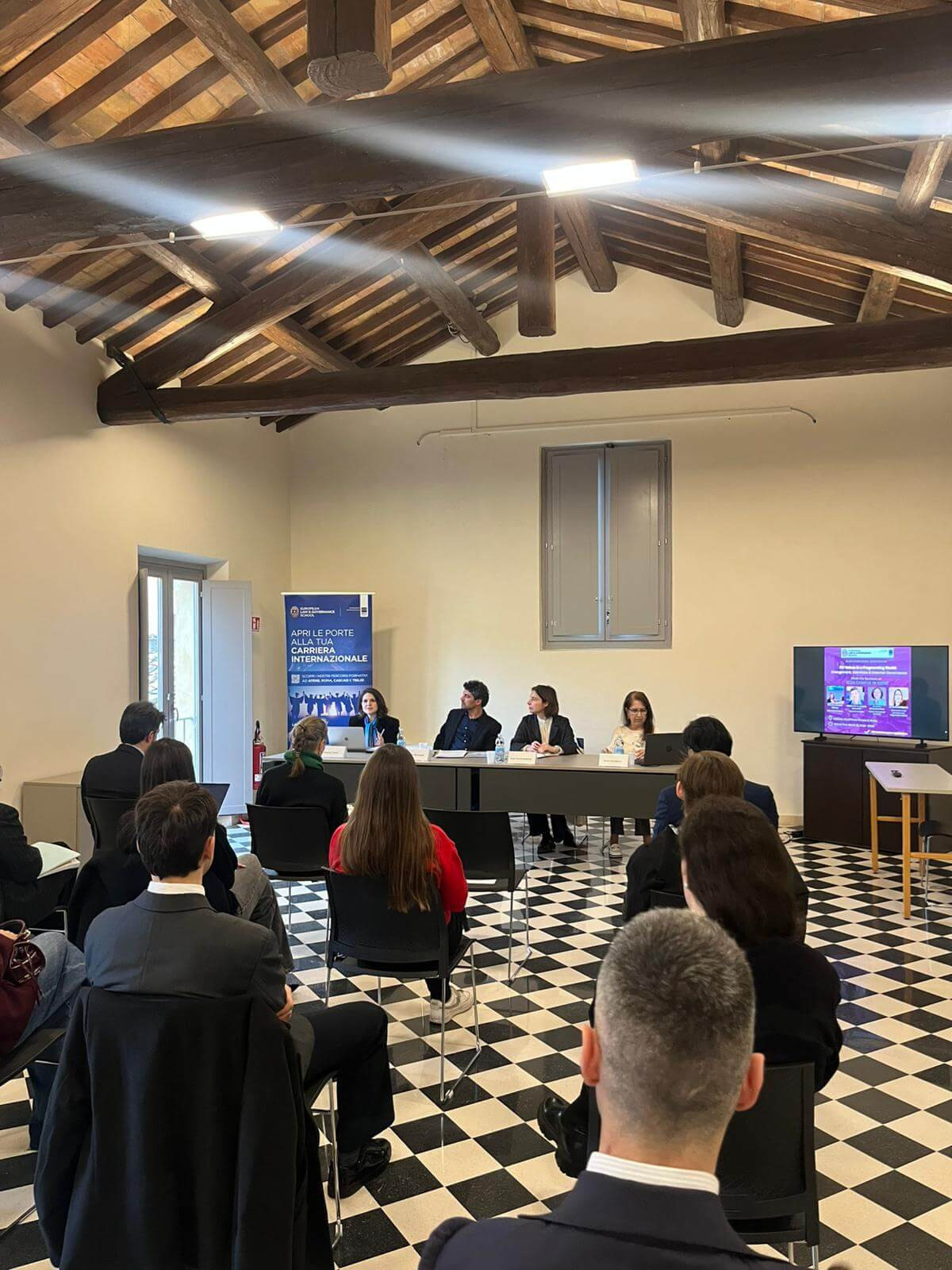
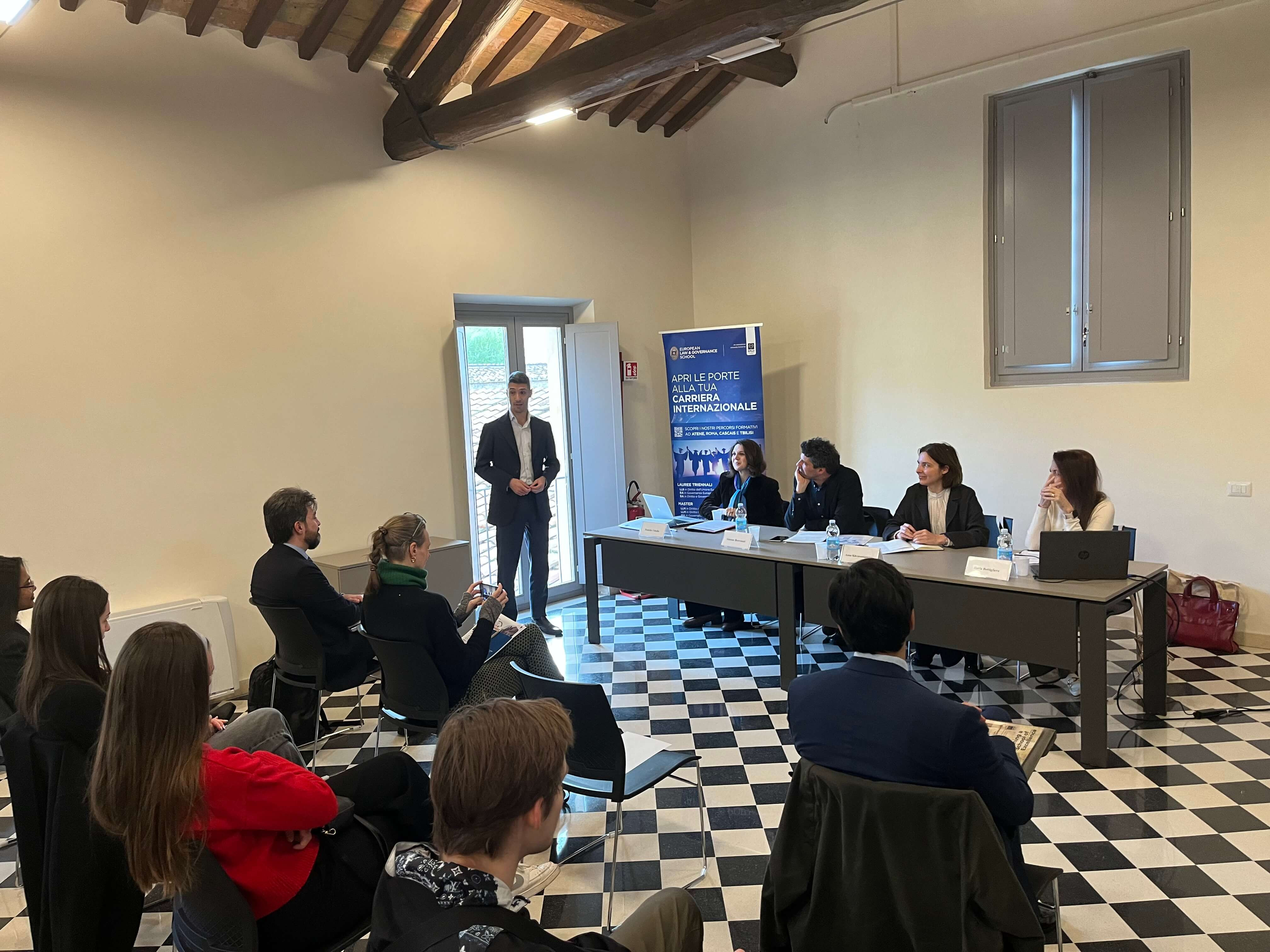
À l’occasion de l’inauguration de son nouveau campus à Rome, l’European Law and Governance School (ELGS), qui opère sous l’égide de l’European Public Law Organization (EPLO), a organisé une table ronde inaugurale intitulée« Les valeurs de l’UE dans un monde en fragmentation : élargissement, identités et gouvernance extérieure ».
Cet événement a réuni des universitaires et des praticiens de premier plan afin de réfléchir à l’évolution de la signification et à la résilience des valeurs de l’Union européenne dans un contexte marqué par des tensions géopolitiques, des défis démocratiques et des débats renouvelés sur l’élargissement. Il a attiré un public varié composé d’étudiants, de jeunes chercheurs et d’experts issus d’organisations internationales basées à Rome, notamment l’UNICRI et l’IDLO. Au nom de l’EPLO/ELGS, M. Dimitris Tsaknis a souhaité la bienvenue aux professeurs et aux invités.
Points clés :
La professeure associée Daniela Vitiello (Université de Tuscia) a ouvert la discussion en examinant le concept de solidarité au sein du cadre constitutionnel de l’UE. Elle en a souligné les multiples dimensions, présentant la solidarité comme un principe juridique façonnant les relations entre les États membres, un mécanisme de gestion des crises et une force normative plus large guidant l’intégration européenne. Ses remarques ont porté sur la tension entre les modèles de solidarité centrés sur soi et transnationaux, ainsi que sur l’importance du partage des responsabilités pour répondre aux défis contemporains tels que les migrations et les pressions extérieures.
Le professeur associé Simone Benvenuti (Université Roma Tre) s’est demandé si l’Union européenne pouvait réellement jouer un rôle de moteur mondial de la démocratisation. Il a souligné le fossé entre les ambitions normatives de l’UE et les réalités sur le terrain, notant que le développement démocratique est fortement influencé par les conditions politiques nationales et les contraintes géopolitiques. Alors que l’UE continue de promouvoir la démocratie par le biais de partenariats et de cadres de coopération, elle adopte de plus en plus une approche pragmatique et sensible au contexte, cherchant à éviter une surtension normative dans un environnement international et national fragmenté.
Mme Anna Khvorostiankina (Université internationale d’Eurasie), qui a également animé la table ronde, a apporté un point de vue extérieur en se concentrant sur les relations de l’Arménie avec l’UE. Elle a évoqué la loi de 2025 lançant le processus d’adhésion du pays à l’UE, soulignant son importance en tant qu’initiative portée par la société civile et reflétant les aspirations du public en faveur de l’intégration européenne. Elle a toutefois noté que, si l’alignement législatif sur les valeurs de l’UE est souvent atteint, la mise en œuvre reste fréquemment superficielle. S'appuyant sur les évolutions constitutionnelles et politiques de l'Arménie, elle a souligné qu'une transformation significative nécessite des changements plus profonds dans la culture juridique, les pratiques institutionnelles et l'engagement sociétal. À cet égard, le rôle le plus efficace de l'UE réside dans le soutien à la société civile, à l'éducation et à la gouvernance participative.
La table ronde s'est conclue par l'intervention de Mme Ilaria Bottigliero, directrice de la recherche et de l'apprentissage à l'Organisation internationale pour le droit du développement (IDLO), qui a présenté une perspective axée sur la pratique concernant la réforme de l'État de droit. Elle a souligné que la transformation juridique et institutionnelle durable repose sur la combinaison de réformes descendantes et d’un renforcement des capacités ascendant, plaçant les individus au centre des systèmes judiciaires. S’appuyant sur des exemples concrets tirés de l’Ukraine, de la Moldavie, des Balkans occidentaux, du Kenya et de la Mongolie, elle a illustré la manière dont l’IDLO soutient des réformes adaptées au contexte pour renforcer les capacités institutionnelles, lutter contre les inégalités et améliorer l’accès à la justice.
Dans l’ensemble, la discussion a souligné que les valeurs de l’UE ne devaient pas être comprises comme des principes statiques, mais comme des éléments dynamiques et contestés, façonnés à la fois par les évolutions internes et l’engagement externe. Le débat a été enrichi par une série de questions pertinentes posées par le public. Dans ce contexte en constante évolution, les plateformes universitaires et axées sur les politiques publiques jouent un rôle crucial pour favoriser le dialogue, faire progresser la recherche et contribuer à une meilleure compréhension de la gouvernance dans un monde de plus en plus fragmenté.