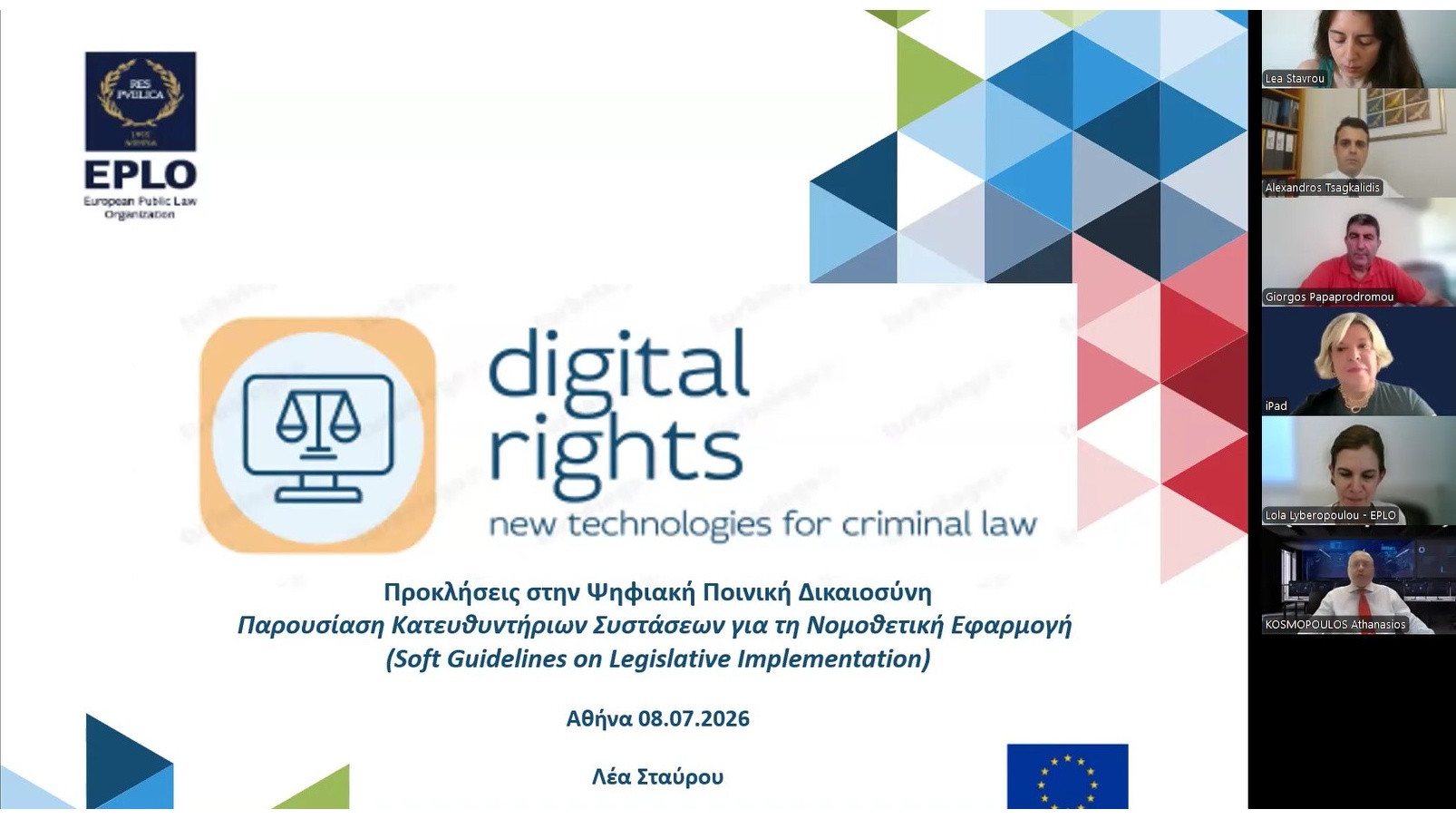
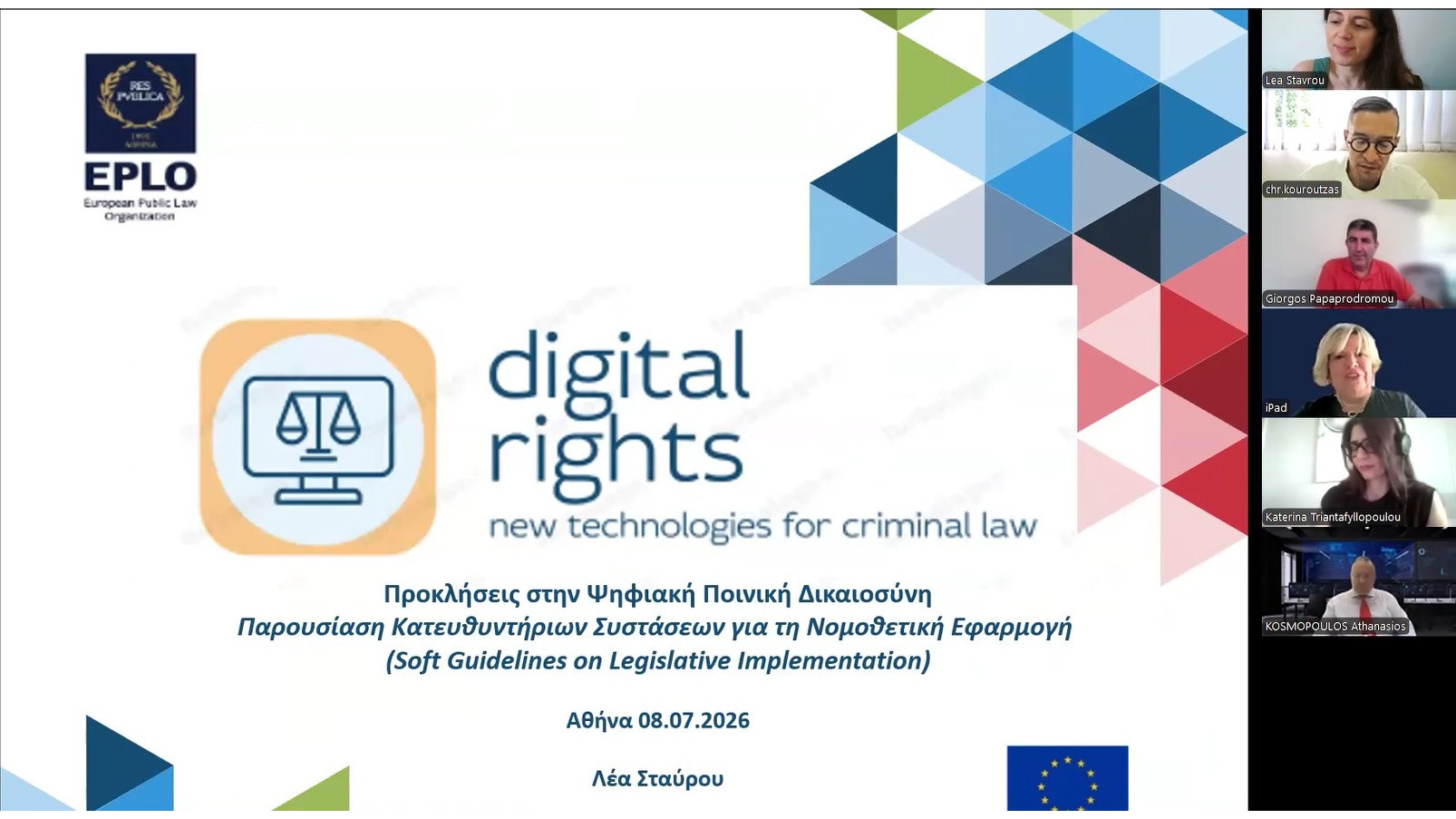
On 8 July 2026, the European Public Law Organization (EPLO), organized the online discussion Challenges in Digital Criminal Justice within the framework of the EU-funded project DIGITAL RIGHTS – New Technologies for Criminal Law, and was held online via videoconference.
The event aimed to form and validate the project’s Soft Guidelines on Legislative Implementation through consultation with policy makers, national experts and stakeholders prior to their finalization. The panel sought to ensure that the proposed recommendations adequately reflect the practical needs of criminal justice professionals and address the challenges posed by the increasing use of digital technologies within criminal proceedings.
The event was chaired by Professor Vasiliki Artinopoulou, Scientific Coordinator of the DIGITAL RIGHTS project, who welcomed participants, while Mrs. Lea Stavrou, Senior Program Officer at EPLO, presented the draft Soft Guidelines on Legislative Implementation.
The presentation introduced the objectives of the DIGITAL RIGHTS project and explained that the Guidelines constitute a non-binding policy instrument designed to assist legislators, judicial authorities and practitioners in adapting existing procedural safeguards to the realities of digital criminal justice.
During the discussion all participants, were invited to provide comments, identify implementation challenges and propose improvements for the final version of the Guidelinesproviding valuable insights into the practical implementation of procedural safeguards within increasingly digital criminal justice systems.
The discussion brought together 14 participants representing:
• the judiciary
• legal practice
• law enforcement
• academia
• digital governance
• cybercrime.
Their multidisciplinary expertise ensured that the discussion reflected both the legal and operational dimensions of the proposed recommendations.
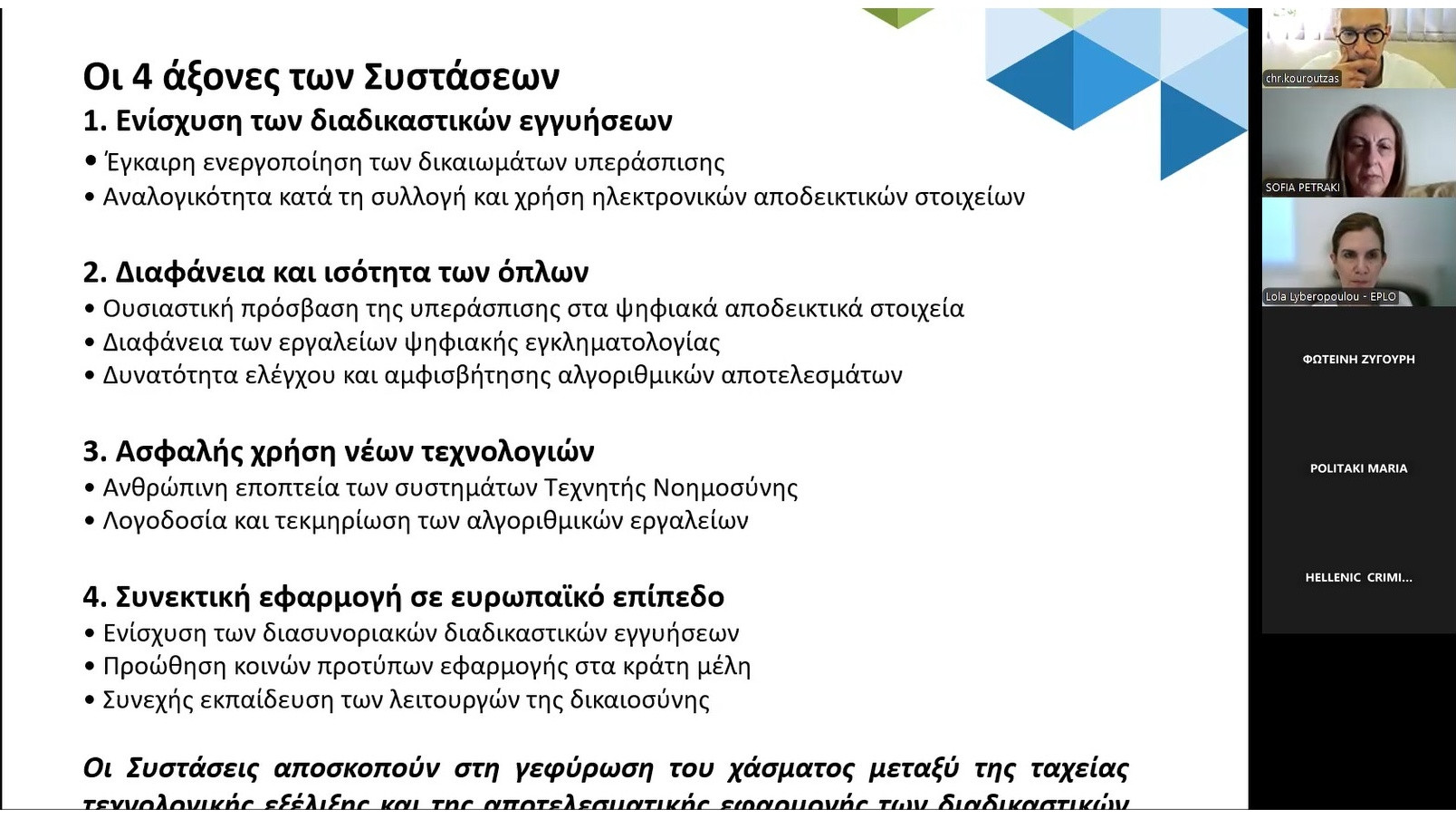
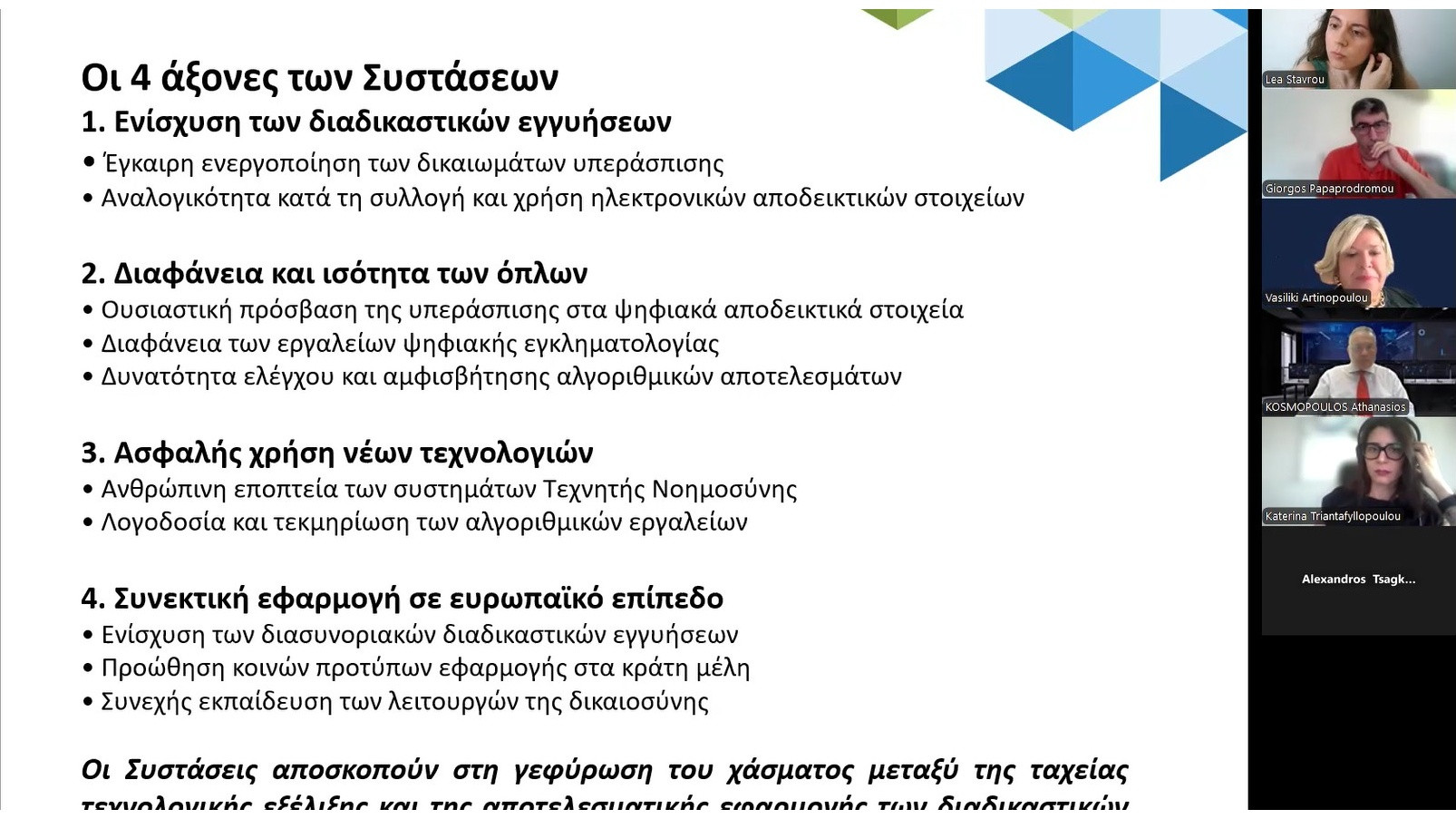
Particular emphasis was placed on the importance of transparency, explainability, meaningful human oversight, specialized professional training and effective cross-border judicial cooperation in criminal proceedings involving digital technologies, electronic evidence and AI.
Overall, both the discussion and the evaluation results demonstrated broad consensus regarding the necessity and practical value of the proposed Soft Guidelines.
Digital Rights is an EU funded project coordinated by the Court of Appeal of Venice with EPLO, Agenfor International Foundation , Institut Européen de l'Expertise et de l'Expert,, Unione delle Camere Penali Italiane , HFOV - Hochschule Für Offentliche Verwaltung as partners.