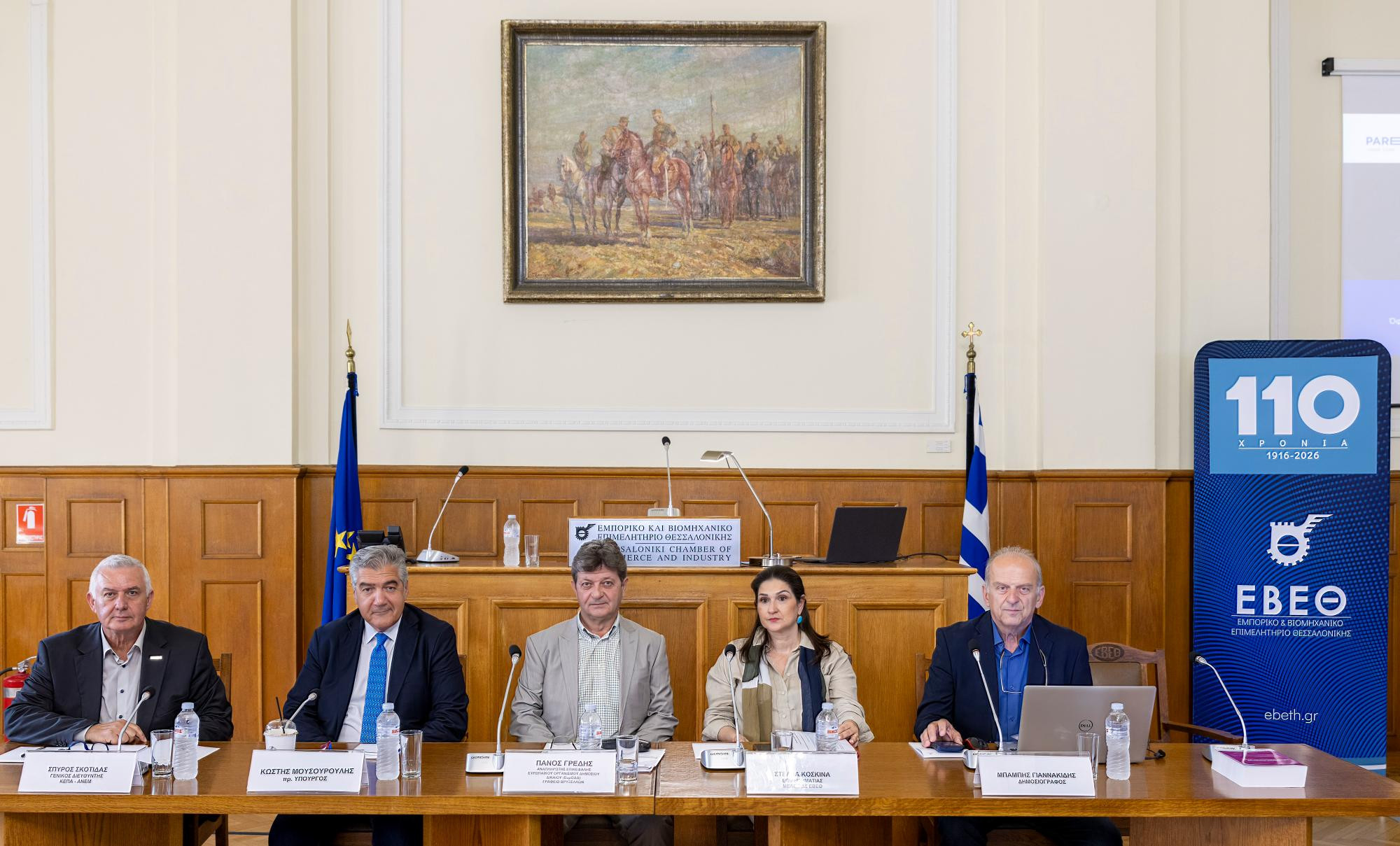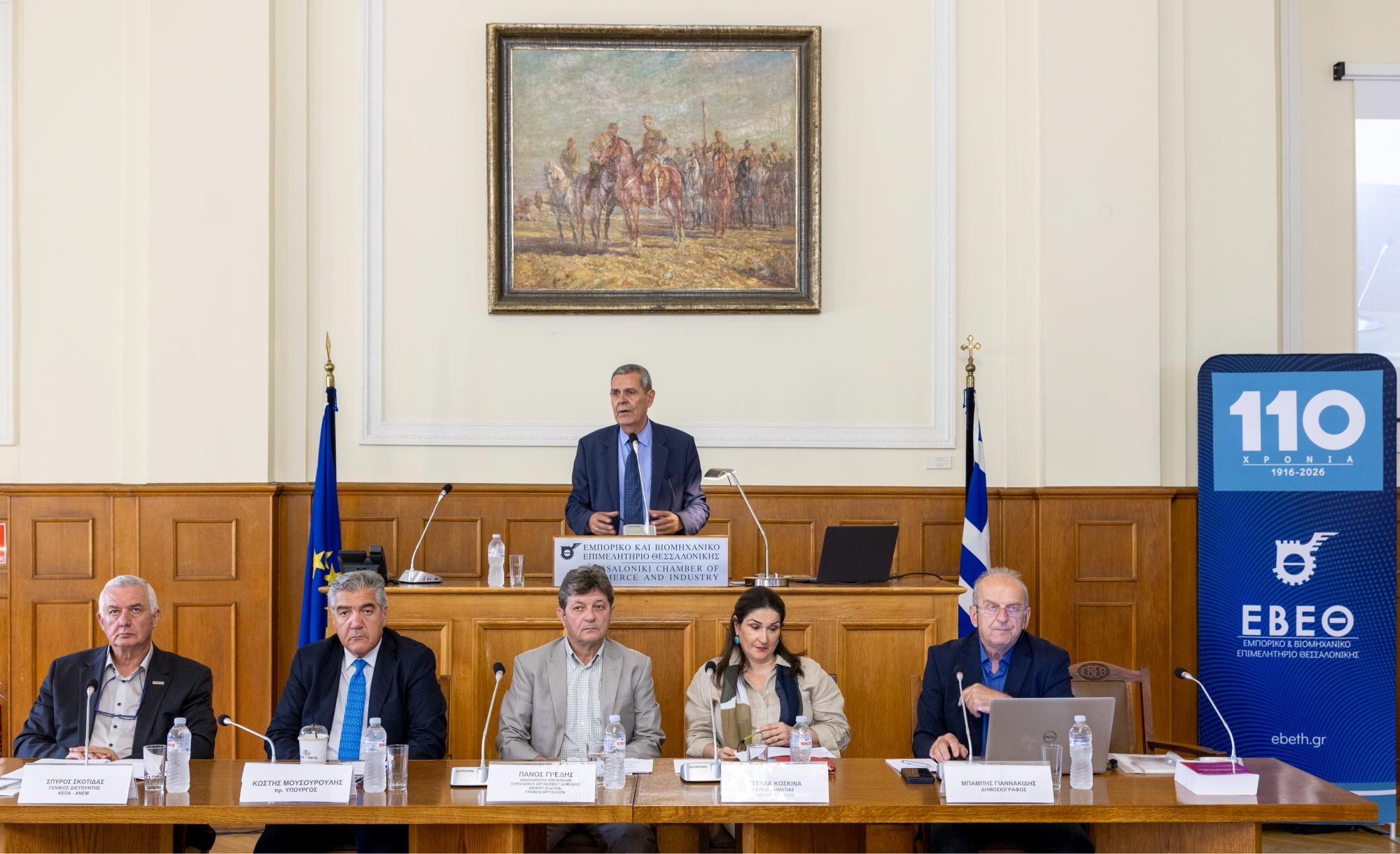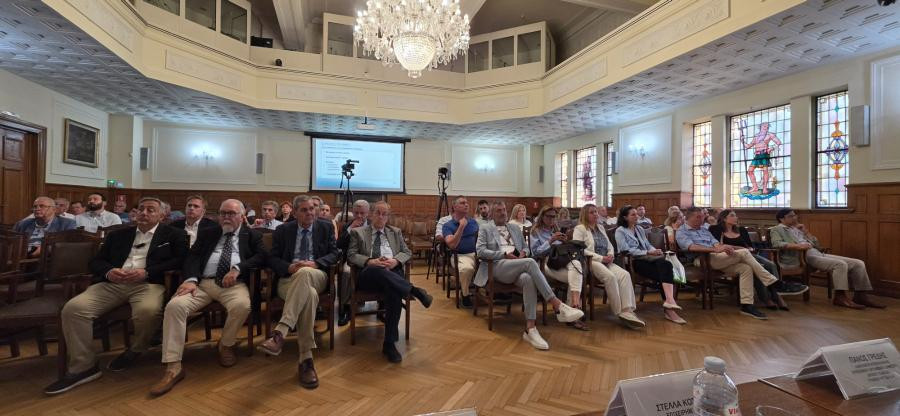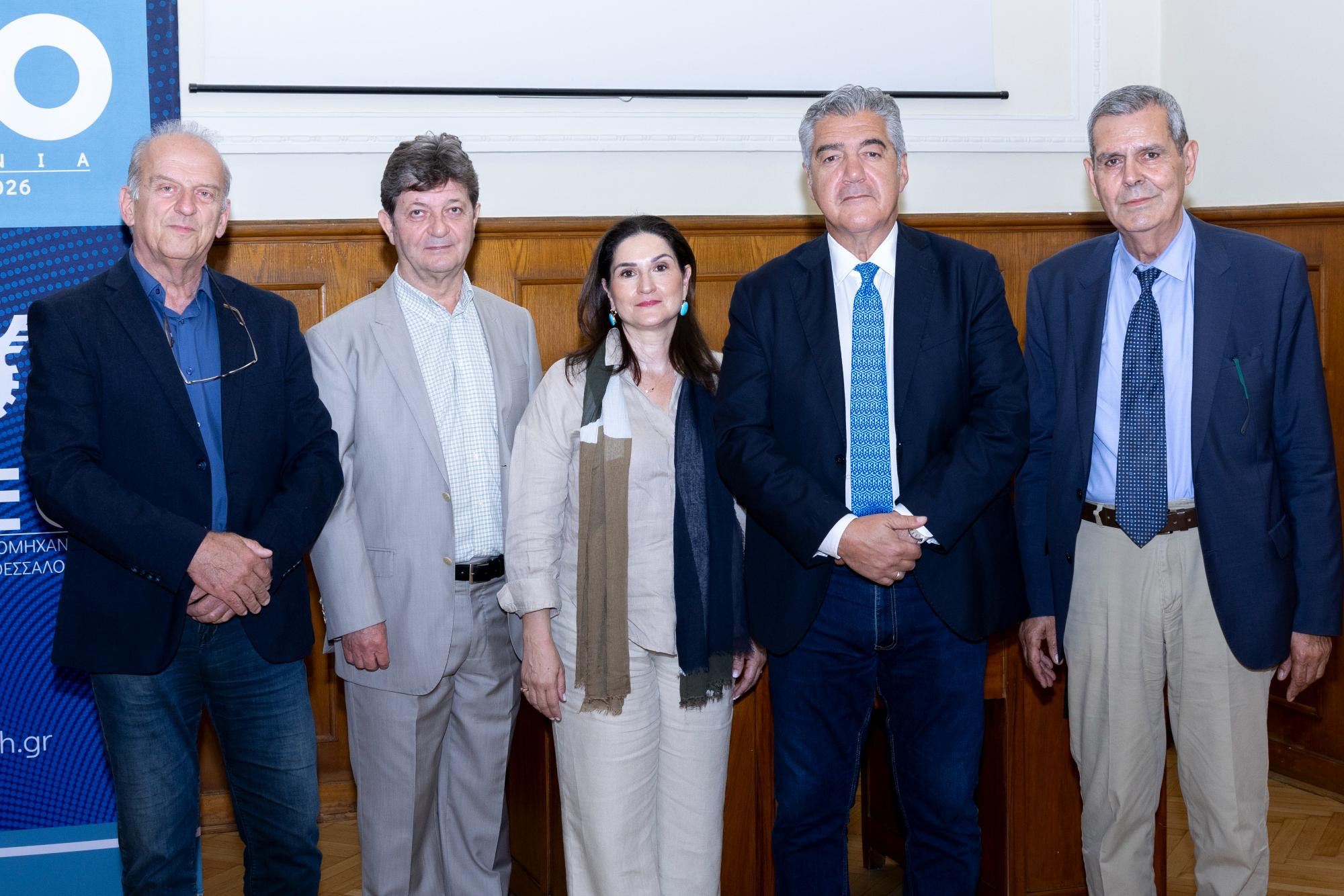

The European Public Law Organization (EPLO) participated in an open discussion on the challenges and opportunities facing Greek businesses in accessing co‑financed programmes, organized by the PAREMVASI Think Tank and the Chamber of Commerce and Industry of Thessaloniki (EBEΘ).
Representing EPLO, Panos Gredis, Deputy Head of the EPLO Brussels Office, joined a panel of distinguished speakers to examine why thousands of Greek enterprises — particularly small and medium‑sized ones — struggled to benefit from key European funding instruments such as ESPA and the Recovery and Resilience Facility.
The event, titled “Greek Businesses & Co‑Financed Projects: Benefits, Prospects and Weaknesses in Their Utilization”, brought together policymakers, business leaders, and experts to discuss structural barriers and propose solutions ahead of the EU’s new programming period 2028–2034.
Key themes of the discussion included:
- Barriers to accessing funding for SMEs and regional enterprises
- The impact of bureaucracy and banking criteria
- The effectiveness of existing tools in strengthening competitiveness and productivity
- Policy adjustments needed for the upcoming EU funding cycle
During his intervention, Panos Gredis presented the full landscape of EU funding opportunities available to small and medium‑sized enterprises, outlining key programmes such as the Single Market Programme, Horizon Europe, cohesion funding, and the SME Fund. He also analysed the European Commission’s proposal for the new Multiannual Financial Framework 2028–2034, highlighting the forthcoming European Competitiveness Fund and the EU’s efforts to simplify access to financing, strengthen innovation, and support regional development.
The panel also featured:
- Kostis Mousouroulis, former Minister
- Stella Koskina, Entrepreneur and Member of the EBEΘ Board
- Spyros Skotidas, General Director of KEPA–ANEM
The discussion was moderated by journalist Babis Giannakidis and was broadcast online through Livemedia.