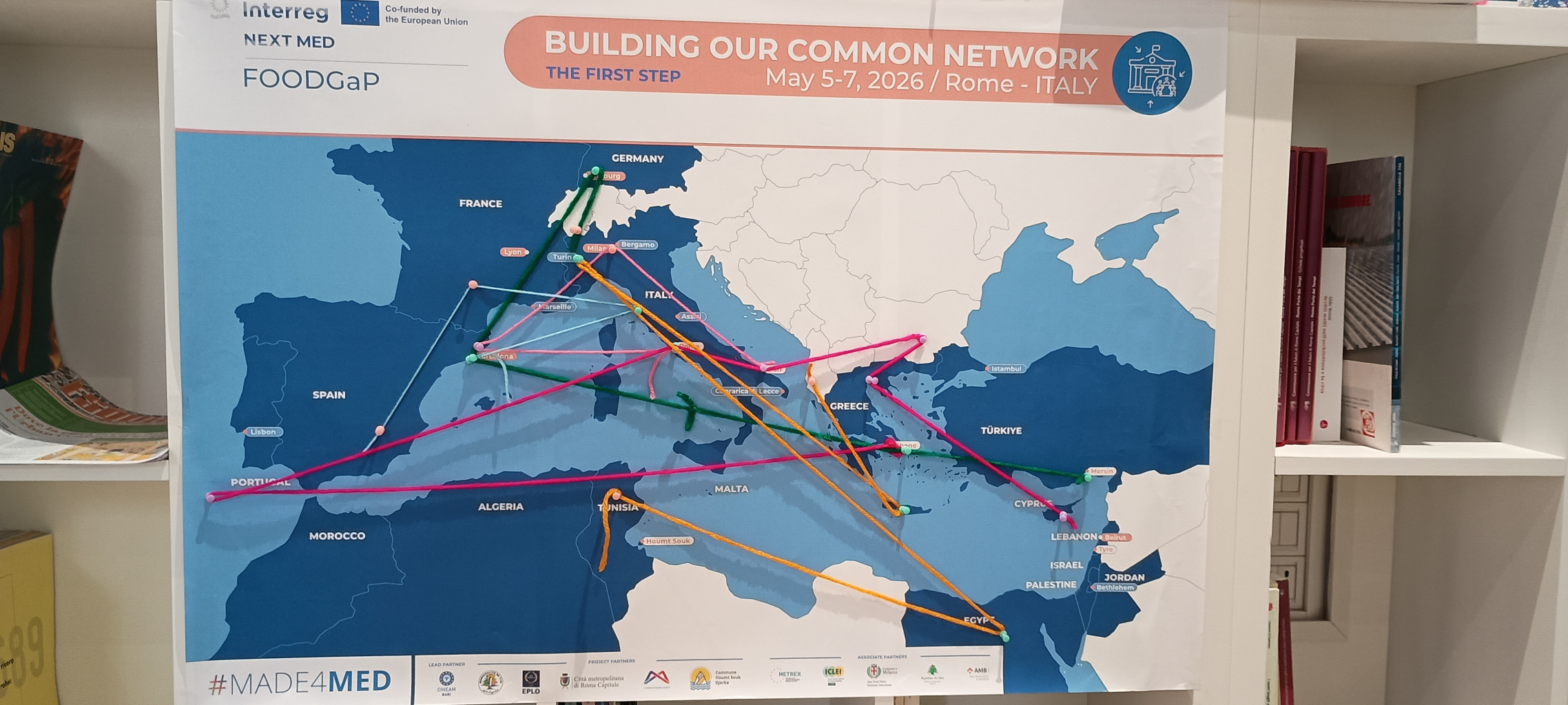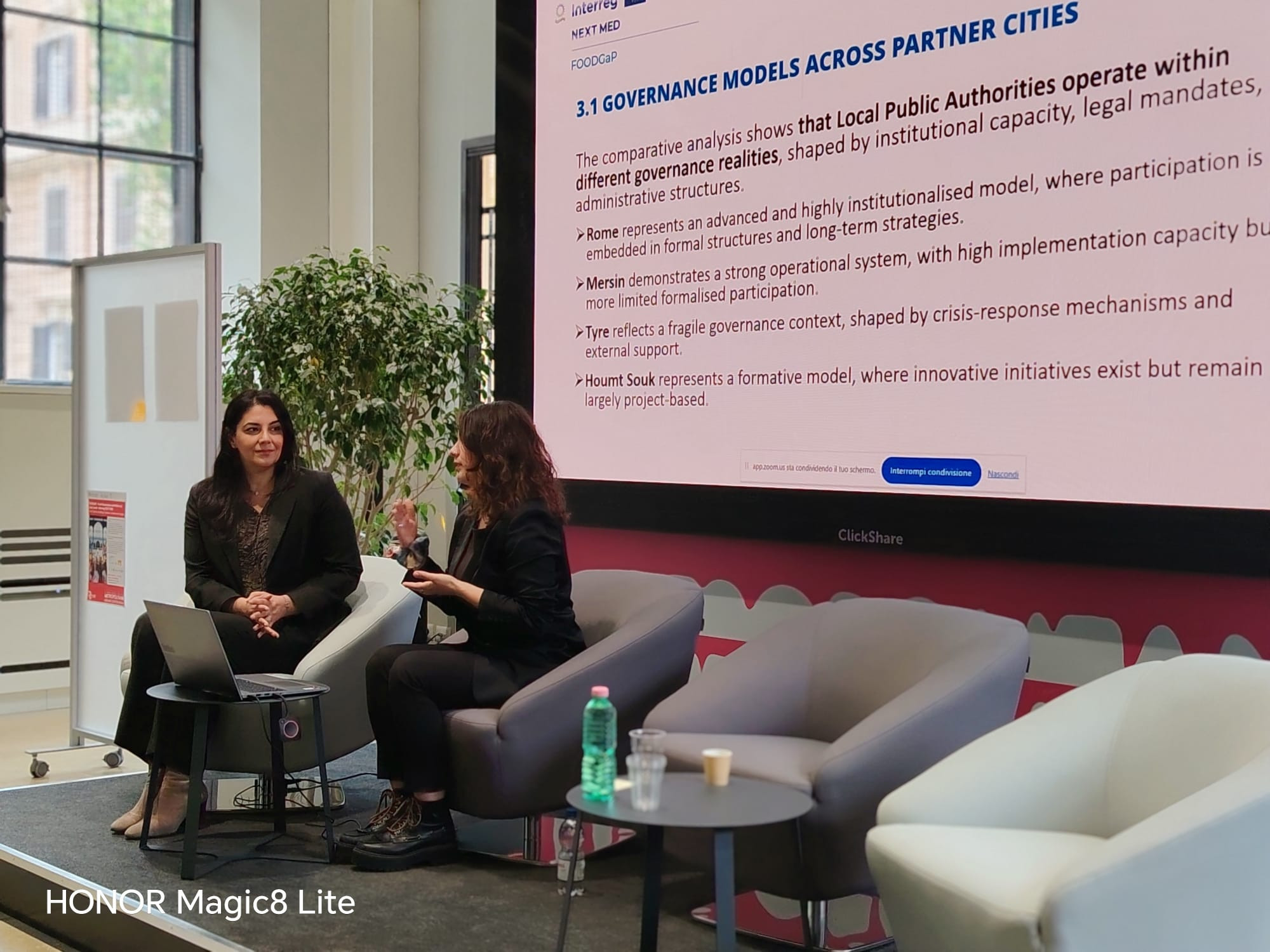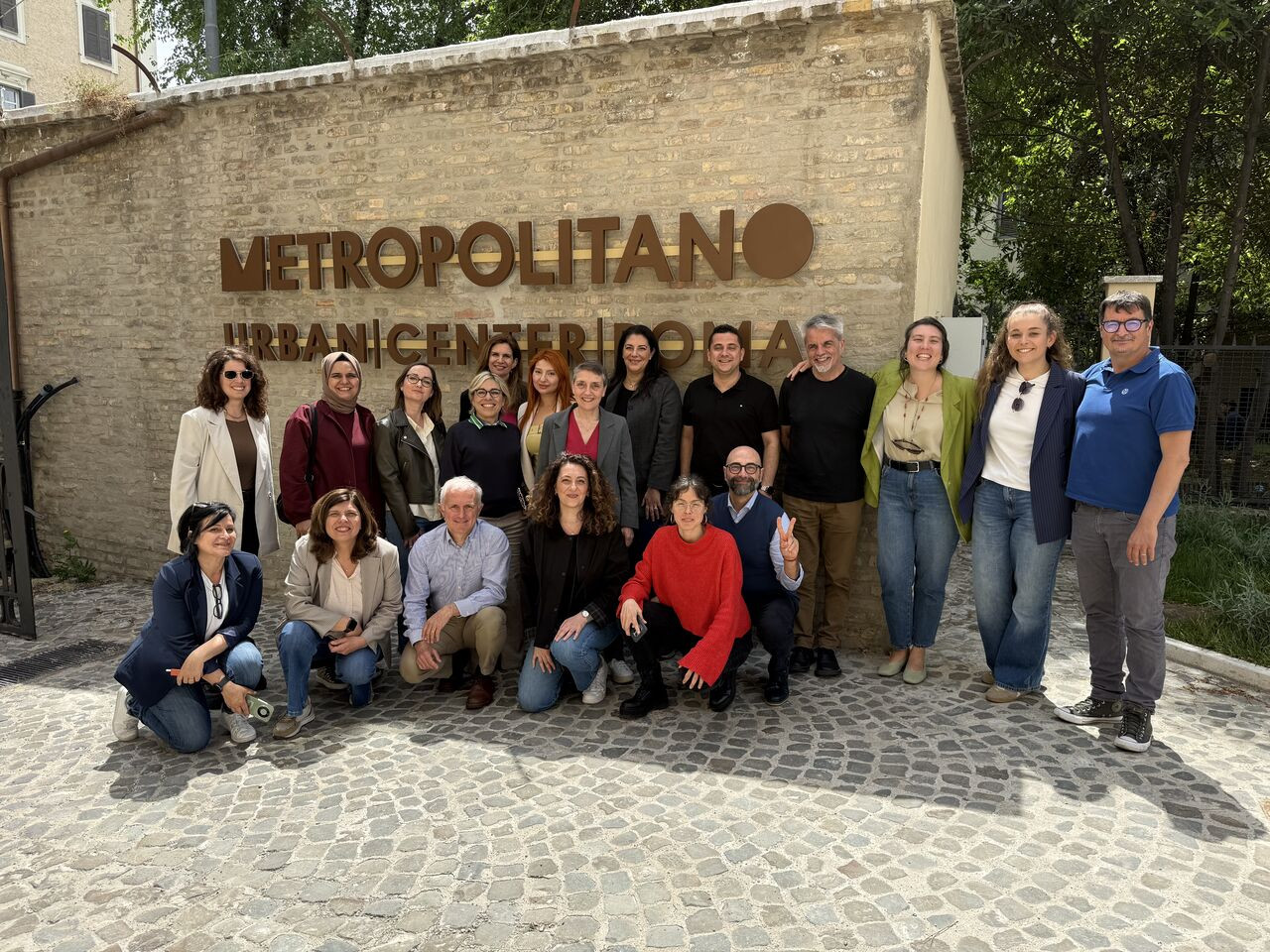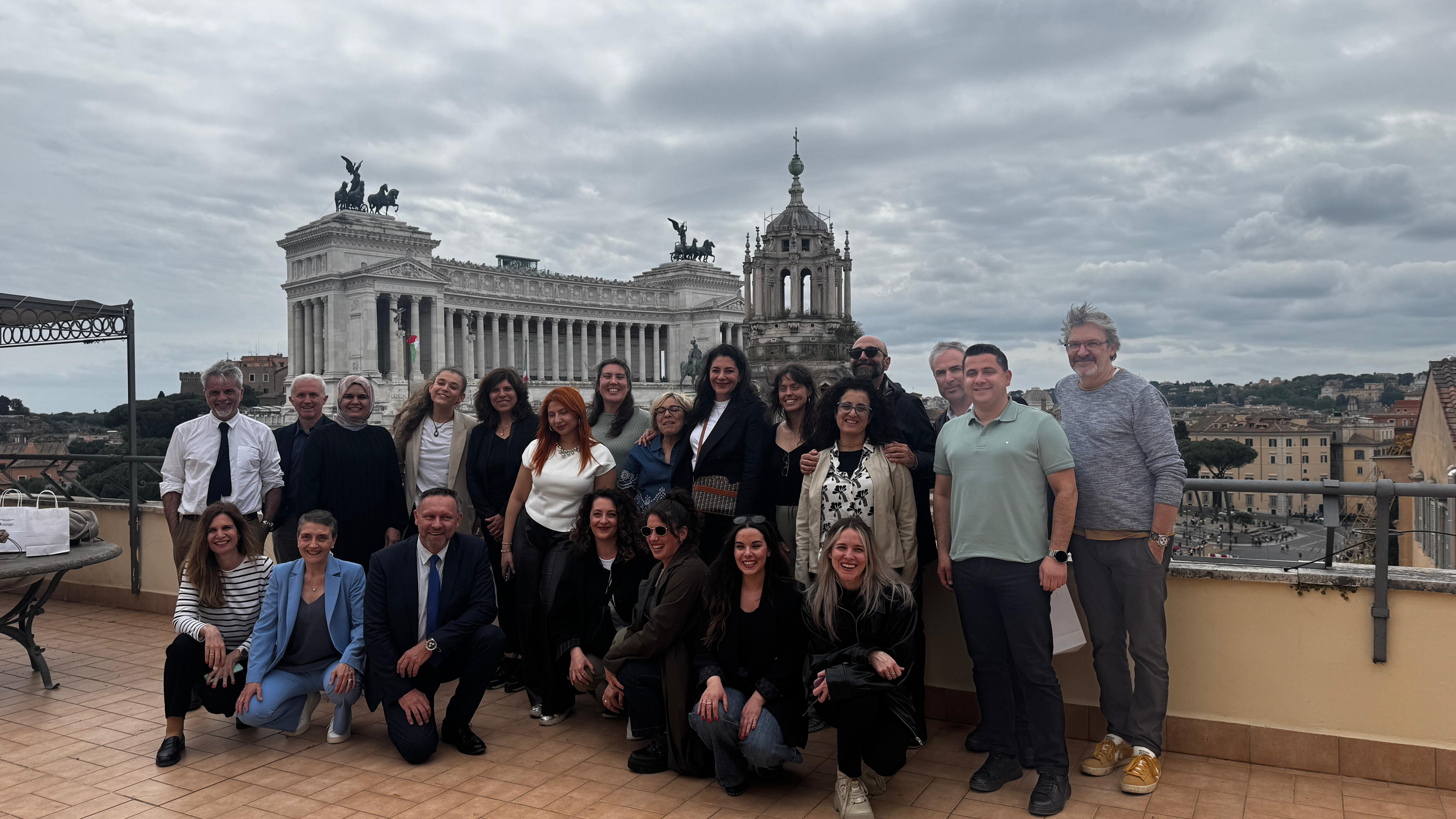
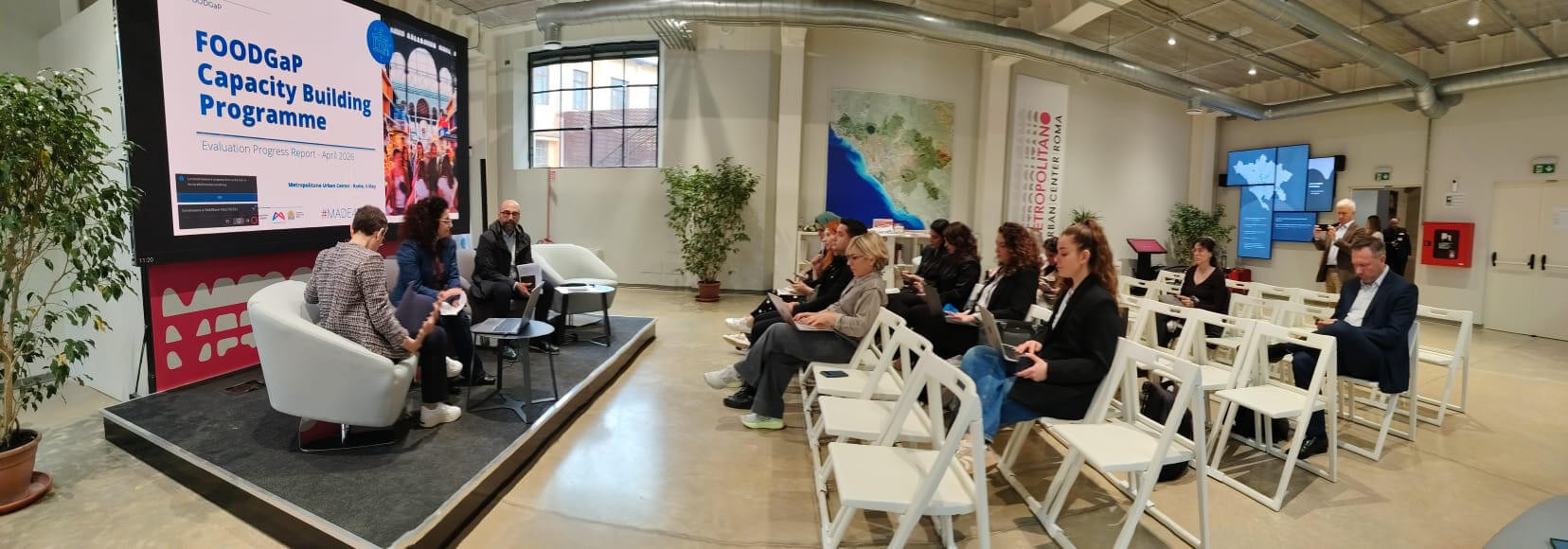
From 5 to 7 May 2026, the European Public Law Organization (EPLO), together with its Institute for Sustainable Development, participated in the international Living Lab and the Steering Committee Meeting of the FOODGaP – Interreg NEXT MED project, hosted at the Urban Center in Rome.
Alongside the project partners — CIHEAM Bari (Lead Partner), Metropolitan City of Rome Capital, Mersin Metropolitan Municipality, Municipality of Tyre, Municipality of Djerba Houmt Souk, and the associated partners ICLEI and Àrea Metropolitana de Barcelona (AMB) — EPLO contributed to three days of productive discussions, collaborative exercises, and exchange of experiences on sustainable and participatory food governance.
The Living Lab sessions focused on strengthening governance models for local food systems, identifying practical approaches for stakeholder engagement, and fostering cooperation among Mediterranean territories.
As WP4 leader, the Institute for Sustainable Development - EPLO team facilitated the governance-focused sessions of the Living Lab, supporting the transition from comparative analysis and capacity-building activities towards the co-design of local governance models for sustainable food systems, building on its governance and deliberative processes expertise, linking this work with the UN Sustainable Development Goals.
During both Day 1 and Day 3 of the Living Lab, guided by the team, partners worked together in hands-on and highly interactive workshop sessions to identify key aspects related to their governance reality, institutional priorities, gaps, strengths, and opportunities. Through competence mapping exercises, stakeholder mapping, and collaborative governance design activities, participants collectively explored governance challenges and operational needs within their local contexts.
The workshops helped map governance structures, institutional capacities, policy domains, and relevant stakeholders, contributing to a shared understanding of local governance ecosystems across the participating Local Public Authorities. This process aimed to gather the necessary information to support the development of tailored governance models adapted to the specific needs, institutional realities, and competences of each organisation.
The Living Lab marked an important milestone for FOODGaP, creating a common and strengthening cooperation and knowledge exchange among the partners.
The final day of the meeting was dedicated to consolidating the outcomes of the workshop and exploring future opportunities for collaboration, joint initiatives, and knowledge exchange among partners.
The FOODGaP project continues to support innovative and inclusive approaches aimed at building more resilient and sustainable local food systems across the Mediterranean region.
EPLO extends its warm thanks to the hosts and partners for their excellent hospitality and cooperation throughout the event and looks forward to the next project meeting.